
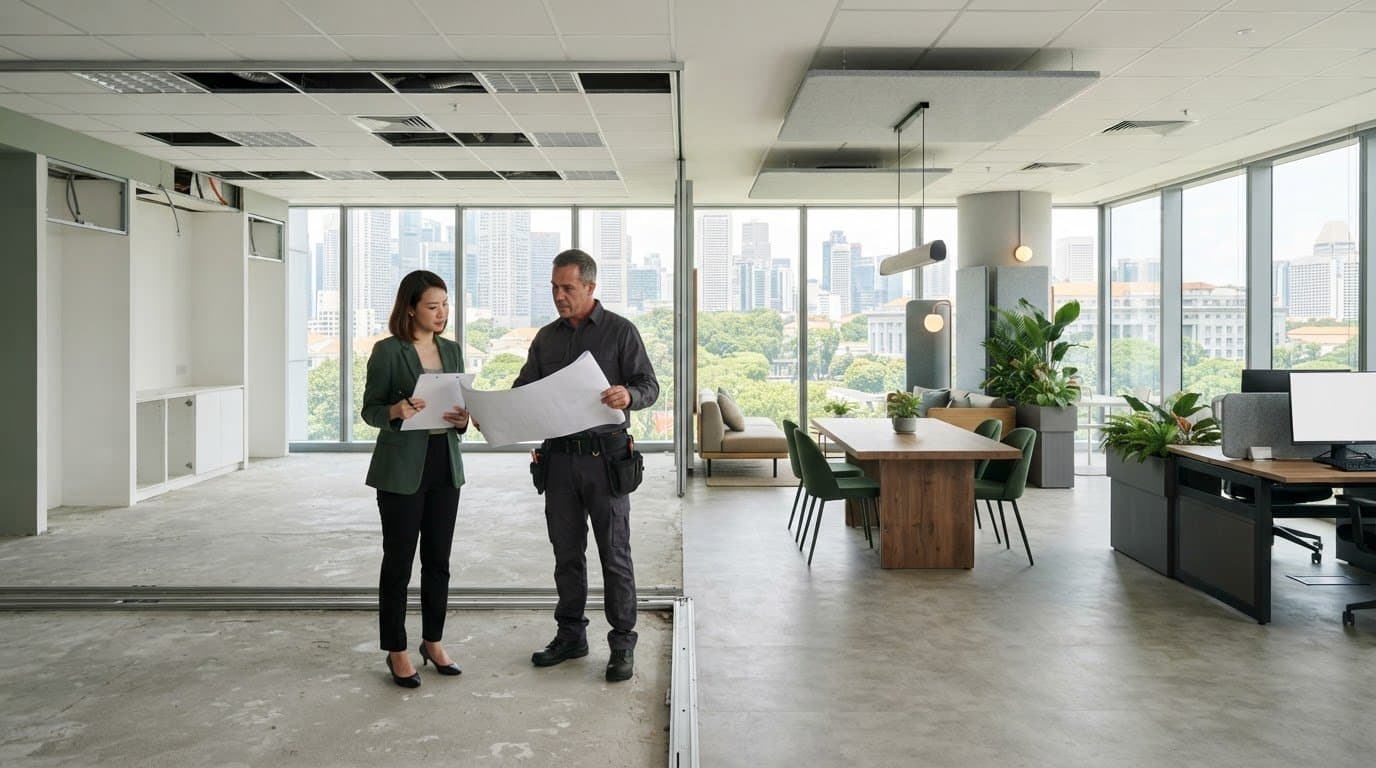
Reinstatement Services in Singapore: An Office Tenant’s Guide
Plan your office handover smoothly. Master lease terms before your commercial office renovation Singapore to ensure a transparent, stress-free tenancy exit.
What if your office doesn’t need to return to a bare shell? The answer depends on your lease, not a universal reinstatement checklist. If you’re planning commercial office renovation singapore for your next workspace, it’s easy to assume the current office must be stripped back completely. Removing too much, or leaving work the landlord expects you to undo, can complicate handover.
Focus first on timing and scope. Reinstatement may involve removing partitions, fixtures or alterations, but the agreed requirements can differ from one lease to another. This guide explains how to review your reinstatement clause, compare it with the office’s documented starting condition, and identify details to clarify in writing before work begins.
You’ll also find a practical sequence for planning your exit, coordinating work around your handover date and keeping a clear record of decisions. If you’re moving into a new workspace, FT2 Interior Design provides commercial office design and renovation, with 3D visualisation to help you plan the new space. That service supports design planning; your lease remains the guide to reinstatement.
Key Takeaways
- Use your lease, later written agreements and handover records to establish the return condition for your office.
- Gather relevant documents, inspect the premises and assign an internal owner to coordinate decisions and records.
- Don’t assume reinstatement always means a bare-shell return. Identify the condition agreed for your tenancy.
- Plan work sequencing, access and handover records around the confirmed scope and your lease timeline.
- Keep reinstatement requirements separate from your next workspace brief, whether you’re planning commercial office renovation singapore or another office design project.
Table of Contents
- What Reinstatement Means for Singapore Office Tenants
- How to establish your Singapore office reinstatement scope
- Does office reinstatement always mean returning to a bare shell?
- How to plan office reinstatement and handover in Singapore
- Plan the next office project after reinstatement
What Reinstatement Means for Singapore Office Tenants
Office reinstatement is work intended to meet the agreed return condition for leased premises at the end of a tenancy. There is no single reinstatement scope for every tenancy: requirements depend on the lease, later written agreements and records of the premises’ condition.
That distinction matters. Reinstatement concerns the condition you’ve agreed to return the office in. A new fit-out creates a workspace for future use, while a routine refresh updates the existing space. The work may overlap, but the purpose is different. When planning commercial office renovation singapore, keep the new workspace brief separate from the exit requirements for your current premises.
What can an office reinstatement scope include?
Depending on the documented agreement, work might include removing tenant-installed partitions, fixtures or other elements, or completing agreed repairs. These are examples, not a standard checklist. Don’t assume every alteration must be removed or every office must return to a bare shell.
Track the practical handover tasks separately from physical work. Cleaning, arranging access for inspections or work, and preparing handover records may each need coordination. List each task, assign an owner and note the required completion date. This helps your team see what remains to be done before the agreed return date.
Why the lease and handover condition matter
Start with the lease. Review the clauses covering reinstatement, alterations and the return condition, then look for later written agreements that may have changed or clarified the original terms. The broader concept of dilapidations relates to breaches of lease covenants. For your planning, focus on the wording and records that apply to your tenancy.
Next, compare dated handover photographs with available fit-out plans, alteration records and other tenancy documents. These materials can help distinguish original features from later changes. For example, a partition shown in a later fit-out record but absent from move-in photographs may need closer review against the written reinstatement terms. Photographs provide context, but they don’t replace the agreement.
If documents conflict or leave a point open, record the issue and seek written clarification from the relevant parties before planning that work. Keep the response with your tenancy records. Clear documentation gives your team a sounder basis for deciding what belongs in the reinstatement plan, rather than relying on assumptions about what “return to original condition” means.
How to establish your Singapore office reinstatement scope
A clear scope comes from records and inspection, not guesswork. Gather the documents, inspect the premises, clarify uncertain items, plan the agreed work and record the handover. This sequence gives your team a shared reference point without assuming a fixed timeline or standard scope.
Assign clear roles within your organisation. A facilities or workplace lead can coordinate the inspection and keep records together. The person responsible for the lease, with support from your organisation’s legal adviser where needed, should review the relevant terms. Include IT or operations if their installations or equipment affect the premises. Make sure an authorised decision-maker can resolve outstanding questions.
Which records should you gather before planning?
Bring together the tenancy agreement, fit-out approvals, later written variations, existing plans and handover photographs. Add records of tenant-installed changes, such as partition plans or documentation for installed fixtures. Together, these help you compare what was present at the start with the current space and the return condition described in writing.
Keep one list of unresolved items. For each, note the relevant document, what needs clarification and who in your organisation will follow up. This keeps open questions from being mistaken for agreed work.
How to document and clarify the required return condition
During a recorded inspection, compare the current premises with the available documents. Note each relevant area or item, and take dated photographs that show its condition and location. Plans can help identify changes, but compare them with the space and alteration records rather than treating a drawing as proof of what must be removed.
Turn the inspection into an itemised scope. Separate agreed tasks from open questions, and record who will clarify each question. Keep written responses and updated scope documents with the project records so the team is working from the same version. If work involves window safety, the Building and Construction Authority (BCA) identifies reinstatement of safety barriers in connection with window work as requiring a Professional Engineer. Treat this as a specific example, not a rule for every reinstatement project.
Once the return scope is documented, keep it distinct from planning the next workspace. FT2 Interior Design provides commercial office design and renovation, with 3D visualisation to support design planning. Use it to shape a future office brief while keeping your tenancy documents as the basis for the exit plan.
Does office reinstatement always mean returning to a bare shell?
No. Don’t assume every Singapore office tenancy requires a bare-shell return. A bare shell is one possible return condition, not a universal rule. Your specific obligation depends on the documents that apply to your tenancy, including the signed lease and any later written approvals or variations.
An existing fit-out doesn’t settle the question either. A partition, floor finish or other tenant-installed feature may need to be removed, retained or addressed in another agreed way. Its presence in the office today does not, by itself, show what the landlord expects at handover. A practice you’ve heard is common in other buildings is not automatically a requirement under your lease.
Singapore has legislation specifically titled the Lease Agreements for Retail Premises Act 2023. Its title is limited to retail premises, so don’t assume it governs your office tenancy. For reinstatement planning, focus on the written agreements that apply to your premises and seek appropriate clarification if their meaning or scope is uncertain.
Common assumptions that can lead to scope confusion
Separate assumptions from documented requirements before scheduling work. Use this comparison to identify what needs checking:
- Assumption: Every tenant must remove every alteration. Check: What do the reinstatement and alteration terms say about each change? Evidence: Fit-out approvals, written variations and alteration records.
- Assumption: The office must return to a bare shell. Check: What return condition is specified for this tenancy? Evidence: The signed lease, later written agreements and move-in handover records.
- Assumption: The existing fit-out determines what can stay. Check: Is retention or removal addressed in writing? Evidence: Landlord approvals, correspondence and current premises records.
How to resolve conflicting documents or expectations
If the lease, a later approval and the current condition appear inconsistent, don’t choose an interpretation based on custom alone. Note the specific difference. For example, a plan may show a partition as approved while another document describes a different return condition. Record the relevant document, physical item and proposed treatment.
Then seek written clarification from the relevant landlord or building representative. Keep the response with the lease records and update the working scope so it distinguishes agreed tasks from unresolved items. This gives your team a clearer basis for planning and prevents assumptions from becoming part of the handover plan. The same discipline helps when commercial office renovation singapore involves planning a new workspace alongside the exit from an existing one: keep each project’s scope and records separate.
How to plan office reinstatement and handover in Singapore
Once you have a documented scope, turn it into a working plan tied to the lease milestones. Assign one internal owner to manage decisions, keep the latest documents together and coordinate communication across facilities, operations and IT. That person should also track unresolved items so they aren’t mistaken for approved work.
A practical preparation checklist for tenants
Use this checklist to organise the exit without assuming a standard project duration:
- Confirm the scope: Keep the latest written requirements in one place and list open questions, with an owner for each.
- Coordinate access: Record agreed arrangements for site access, keys and building coordination. Plan for any internal business activities affected by the work.
- Sequence the work: Map tasks against confirmed lease milestones. Identify dependencies, such as clearing an area before agreed work can begin, and update the plan if a scope decision changes.
- Keep evidence: Photograph relevant stages and retain completion records alongside the working scope.
Building or authority requirements may also apply to particular work. Don’t rely on a general checklist for these details. Identify which requirements relate to the premises and proposed tasks, then verify current instructions with the appropriate building representative or authority before scheduling affected work.
What to record at the final handover
Prepare a dated record of the premises at handover. Include photographs, a record of the agreed items completed and any outstanding matters. If an item remains open, note its status and keep related written responses with the record. This creates a clear account of what was observed and discussed instead of relying on memory after the tenancy ends.
Store the final handover documents with the lease, written clarifications and project records. Keep the file organised so your team can distinguish the approved scope from changes or unresolved items. Good document control supports an orderly exit, especially when several people have handled decisions or communications.
Plan the next workspace separately from the exit works. If your business is preparing for commercial office renovation singapore, define the new team’s needs, workflows and space priorities in a separate brief. FT2 Interior Design provides commercial office design and renovation, with 3D visualisation for design planning. Explore commercial office design as you shape your next workspace, while keeping the reinstatement plan tied to the current tenancy’s agreed requirements.
Plan the next office project after reinstatement
Closing out one tenancy can give your team useful insight for the next workspace. Keep the two projects distinct: the previous lease and its written records guide the return condition, while a new office brief should reflect your organisation’s current needs. Mixing them can blur exit obligations with design ideas for a different space.
Turn handover lessons into a clearer office brief
Before settling on a layout, ask your team what helped them work well and what created friction in the previous office. Consider collaboration, focused work, meeting needs, storage, visitor experience and how teams use shared areas. Turn those observations into priorities. For example, if staff struggled to find suitable places for quiet work, record that as an operational need before discussing partitions or finishes.
Keep the new brief focused on what the next workplace must support. Separate essential requirements from preferences, then use that order to guide design decisions. This gives stakeholders a reason for each choice and helps prevent the previous office’s layout from becoming the default for the next one.
Use design planning to picture your next workspace
Once your priorities are clear, 3D visualisation can help stakeholders review a proposed workspace before execution. It gives the team a way to consider how the planned layout may support day-to-day activities, how different areas relate to one another and whether the design reflects the intended use of the space. Feedback at this stage can help align the brief with the proposed concept.
For commercial office renovation singapore planning, keep visualisation in its proper role: it supports discussion about the future workspace, but it does not determine the return condition of your previous tenancy. Share your team’s needs, workflows and design priorities with your office design team so the concept has a clear foundation.
FT2 Interior Design provides commercial office design and renovation services in Singapore, with 3D visualisation for design planning. Explore FT2’s commercial office design and renovation services as you shape a workspace around the way your team works.
Make Your Office Exit a Clear Next Step
A smooth handover starts with documents, not assumptions. Your lease, later written agreements and handover records define the return condition, so don’t treat a bare-shell finish as a universal rule. Gather the relevant records, inspect the premises, list open questions and keep written clarifications with the agreed scope.
Plan access, work sequencing and handover records around confirmed lease milestones, with one internal owner keeping decisions and communication organised. This helps your team separate the current tenancy’s exit requirements from the brief for a future workspace.
As you plan commercial office renovation singapore, turn lessons from your previous office into clear priorities for team workflows, space use and design. FT2 Interior Design provides commercial office design and renovation services, with 3D visualisation to help stakeholders review a proposed workspace during design planning. It supports the new office brief, not the reinstatement decision.
Explore FT2 Interior Design’s commercial office design and renovation services to plan a workspace shaped around your business needs.
Frequently Asked Questions
What are reinstatement services in Singapore?
Reinstatement refers to work intended to return leased premises to an agreed condition at the end of a tenancy. For an office, the tasks depend on your tenancy documents, later written approvals and records of the premises’ condition. The term itself doesn’t set a universal list of works. Review the relevant documents before planning or describing the scope, and keep unclear points separate from agreed tasks in your project records.
Does office reinstatement always mean returning the unit to a bare shell?
No. A bare-shell return may be specified in some tenancy arrangements, but don’t assume it applies to every office. Your lease terms, later written variations and documented handover condition shape the scope. Compare those records with the current premises, then seek written clarification from the relevant landlord or building representative about any differences. This helps your team base its plan on the agreement for your tenancy, not assumptions about common practice.
What documents should I review before planning office reinstatement?
Start with your signed tenancy agreement and written changes or approvals related to alterations. Gather available handover photographs, plans and records of tenant-installed work, such as partitions or fixtures. Together, these can help you compare the current premises with the agreed return condition. List unclear items and record who will clarify each one. Keep the responses with your project documents before finalising the work scope.
How do I prepare for an office reinstatement handover?
First, establish the documented scope and list unresolved questions. Then assign an internal owner and organise access, keys, building coordination, work sequencing and records for agreed tasks. Photograph relevant conditions and retain written updates as work progresses. At handover, prepare a dated record of the premises, completed agreed items and outstanding matters. Set the schedule against the applicable tenancy milestones rather than relying on a general project duration.
What if the lease and the landlord’s expectations appear different?
Compare the signed lease with later written approvals, variations and available handover records. Note exactly what differs, such as a written return condition that appears inconsistent with a later approval. Seek written clarification from the relevant landlord or building representative before treating the point as agreed scope. Keep the response with your project documents and update the working scope so everyone involved can refer to the same information.
Can I plan a new office renovation while preparing for reinstatement?
Yes. Treat them as separate workstreams: use the existing tenancy documents to plan the agreed return condition, and create a new brief for your next workspace. Define business needs, team workflows, space use and design priorities before settling on a layout. For commercial office renovation Singapore planning, FT2 Interior Design provides commercial office design and renovation services, with 3D visualisation to help stakeholders review a proposed design.
Related Articles

16
Oct
Japandi Style HDB Flat: A Practical Guide to Calm, Functional Design
Design a calm, functional japandi style hdb flat. Learn how to balance warm text...

15
Oct
Scandinavian BTO Design: Ideas for a Calm, Practical Home
Plan your Scandinavian interior design for bto flats. See practical storage, war...
14
Oct
5 Room BTO Interior Design Ideas for 2026: Make Every Space Work
Explore 5 room bto interior design ideas 2026 to optimize your layout. See your ...
13
Oct
Smart Home Renovation Singapore: Plan Your Home with Confidence
Plan your smart home renovation Singapore with confidence. Enjoy whole-house 3D ...
12
Oct
HDB Maisonette Renovation Ideas: Make Every Level Work
Explore smart hdb maisonette renovation ideas to connect both levels. See your h...
11
Oct
Cost Breakdown for HDB Kitchen Renovation: Understand Every Quote Line
Review every line item with our cost breakdown for HDB kitchen renovation guide....