
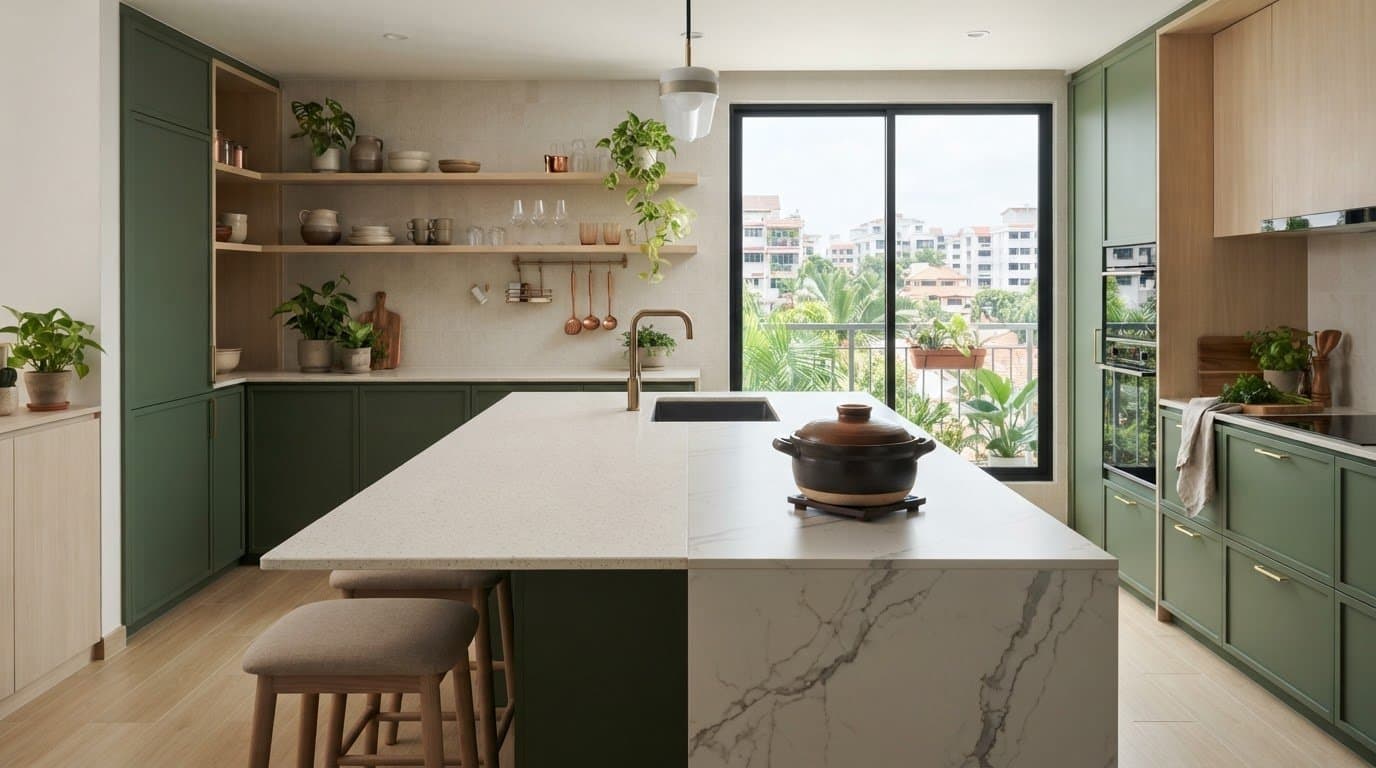
Quartz vs Sintered Stone Countertops: Which Should You Choose
Compare quartz vs sintered stone countertop options for heat resistance, care and style, then choose the surface that suits your kitchen and cooking habits.
Sintered stone has the advantage if heat resistance is your priority: it can withstand temperatures up to 300°C, compared with up to 100°C for quartz. In the quartz vs sintered stone countertop decision, though, heat is only one factor; composition, production and everyday care also affect which surface suits your kitchen.
Both materials offer durable surfaces, but they’re made differently. Quartz combines natural quartz with resins and pigments, while sintered stone is formed by compressing natural minerals under high heat and pressure. This helps explain why they respond differently to heat and sunlight.
It’s reasonable to want a countertop that looks right and works well in daily life. This comparison explains how each surface is made, how it handles heat, and what cleaning and maintenance involve. Use these differences to choose a material that suits your cooking habits and design priorities.
Key Takeaways
- Prioritise heat tolerance if you often set hot cookware on the counter; sintered stone handles more heat, while quartz needs protection from direct heat.
- Both surfaces are straightforward to clean, but sunlight and harsh chemicals call for extra care with quartz.
- Compare colours, patterns and the look you want in your kitchen before deciding which material suits your design.
- Understand how each surface is produced: quartz combines mineral particles with resin, while sintered stone is formed using heat and pressure.
- Use the material comparison alongside a visualisation of your planned space to make a more confident countertop choice.
Table of Contents
- Heat resistance
- Cleaning and maintenance
- Sintered stone vs quartz, which one’s the winner?
- Quartz and sintered stone composition
- How sintered stone, porcelain, and quartz are made
- FT2 Interior Design: HDB BTO Home Renovation
Heat resistance
For direct heat, sintered stone has the advantage: it can withstand temperatures up to 300°C, while quartz can withstand up to 100°C. These are material limits, not a reason to place hot cookware directly on either surface. Use a trivet for a pot straight from the hob, especially on quartz, where resin can discolour or crack over time.
Heat is only one part of durability. Sintered stone resists heat, scratches, ultraviolet rays and chemicals, making it a strong option for demanding kitchen use. Quartz is durable and scratch-resistant, but direct high heat can discolour or warp its surface. Avoid dragging cookware or appliances across either material; lift them to reduce the risk of scratches.
Both surfaces are non-porous, so spills are less likely to soak in than they would on porous materials. Quartz does not need sealing and is easy to clean with a damp cloth. Sintered stone has a zero-percent porous surface and also does not require sealing. Wipe spills promptly, particularly coloured liquids, to keep the surface clean.
Sunlight matters when choosing a surface beyond the kitchen. Prolonged exposure can discolour quartz, while sintered stone resists ultraviolet rays. This makes sintered stone more suitable for exposed locations, including outdoor surfaces. For outdoor projects, check the slab’s intended application; exterior-grade porcelain is recommended for outdoor use.
Some local chips or scratches on quartz and sintered stone can be repaired. However, repairs may remain visible, and severe cracking can require replacing the affected section. Their common risks differ: quartz can suffer heat-related discolouration or cracking, while either surface can be damaged by impact or careless handling.
| Surface | Heat resistance | Scratch and stain resistance | Sunlight and outdoor use |
|---|---|---|---|
| Quartz | Up to 100°C; use a trivet | Durable and non-porous; avoid harsh chemicals | Prolonged sunlight can discolour it |
| Sintered stone | Up to 300°C | Resists scratches and chemicals; non-porous | Resists ultraviolet rays; suited to outdoor surfaces |
Choose sintered stone if heat, sunlight or outdoor exposure are your main concerns. Choose quartz if you can protect it from direct heat and prolonged sunlight.
Cleaning and maintenance
Both quartz and sintered stone suit kitchens where you want a surface that is straightforward to clean. For routine care, wipe the countertop with a damp cloth. Mild soap and water can remove everyday marks from either material. Regular wipe-downs keep crumbs, cooking splashes and fresh stains from lingering while you prepare a meal.
For a spill, clear away food debris first, then wipe the area with a damp cloth. Use mild soap and water if residue remains, and dry the surface afterwards to remove moisture and soap traces. For example, clean a coffee ring soon after it appears instead of letting it sit beside the kettle. Prompt cleaning helps preserve the countertop’s appearance.
Neither material requires sealing. Quartz’s non-porous surface makes routine cleanup easier, and sintered stone is also non-porous. Sintered stone can withstand heavy-duty cleaning products without damage, but quartz should not be exposed to harsh chemicals. Use mild soap and water for regular cleaning, reserving stronger products for sintered stone when needed.
- Clear loose debris. Use a soft cloth to remove crumbs before wiping, so grit does not rub across the surface.
- Clean the mark. Apply mild soap and water to everyday spills, such as sauce or tea.
- Wipe and dry. Finish with a clean damp cloth, then dry the area to remove residue.
- Protect quartz. Keep harsh chemicals and prolonged sunlight away from its surface.
- Follow the care instructions. Use the product guidance for your exact countertop finish and cleaning format.
Extreme heat is mainly a prevention issue, not a cleaning task. If a hot pot leaves a mark on quartz, let the surface cool before cleaning with mild soap and water. Avoid scrubbing with harsh chemicals. Sintered stone offers greater resistance to heat and chemicals, but routine care still starts with a soft cloth.
Prefer a simple cleaning routine? Both surfaces are easy to clean, but their limits differ. Quartz needs more care around harsh chemicals and sunlight, while sintered stone can withstand stronger cleaning products. Neither needs polishing or sealing. These distinctions matter in a busy kitchen where cooking oils, sauces and daily wipe-downs are part of the routine.
If you’re planning a kitchen and want to assess how surfaces work within the overall design, 3D visualisation for interior spaces can help you picture the layout before execution.
Sintered stone vs quartz, which one’s the winner?
Neither surface is right for every kitchen. Before choosing, consider how each slab’s appearance and layout will work with your cabinetry, lighting and room proportions.
Design and Appearance Options
Quartz comes in a range of colours and patterns, so you can coordinate the countertop with cabinet fronts or make it a focal point. Sintered stone’s appearance varies by slab. Review the actual sample rather than relying only on a small image or description. This helps you judge its colour, pattern and overall effect alongside the finishes planned for your kitchen.
Consider the room as a whole. A strong pattern may draw attention to an island, while a quieter surface can complement detailed cabinetry. Compare samples under the lighting planned for the space, since surrounding finishes and light affect how a surface looks in context.
Compare Samples in Your Kitchen
Assess samples alongside your cabinet colour, flooring and backsplash, not in isolation. Place them together and view them from the main entrance and preparation area to see how the surfaces relate across everyday sightlines. If you’re deciding between a prominent pattern and a more restrained look, compare each sample beside the same finishes.
Check the sample in daylight and under your planned kitchen lighting. A colour that looks balanced near a window may feel different under evening lights. Use the same viewing conditions for each option, and note which material best supports the atmosphere you want. This makes the comparison specific to your home’s design.
Plan the Slab Layout
Before approving a pattern, plan how it will run across the counter. Mark the sink, hob, corners and any joins on a simple kitchen drawing. This helps you see whether a prominent vein or repeated motif will sit awkwardly near an opening. Review the slab direction alongside the proposed layout so the design feels intentional.
Consider where the countertop meets other surfaces. An island may be visible from the dining area, while a wall counter may sit close to a patterned backsplash. Review these transitions together, then choose the material and pattern that connect the kitchen’s main elements without competing with them.
The right surface is the one that fits your design priorities and planned layout. If appearance leads your decision, compare full samples in the actual room and check the pattern direction against the counter drawing. If coordination matters most, assess each option beside the cabinet, floor and backsplash finishes before choosing.
Quartz and sintered stone composition
Composition helps explain why these surfaces differ in feel and performance. Compare their mineral content, binders and pigments rather than treating either countertop as natural stone.
Quartz Composition and Resin Content
Engineered quartz combines approximately 90-95% natural quartz crystals with resins and pigments. The quartz provides the mineral base; resin binds the particles, while pigments create colour and patterns. This composition distinguishes quartz from sintered stone, which is made from natural minerals without the resin-and-pigment recipe described for quartz.
Manufacturers press and cure the mixture into slabs. The finished surface is durable and non-porous, but resin remains part of its composition. This matters when comparing kitchen materials: quartz’s mineral content does not make it identical to a solid natural stone slab. Its engineered structure combines crystals with other elements.
Sintered Stone Composition
Sintered stone is made from natural minerals, including clay, feldspar and silica. The materials are compressed under extreme heat and pressure to form a dense slab. Unlike engineered quartz, this composition does not rely on resin as the binder. Sintered stone is described as being made from 100% natural minerals.
That mineral-based makeup creates a different material category, not simply another quartz colour or finish. Its surface is non-porous, and its composition supports a range of slab thicknesses. For example, slabs are available in 6.5mm, 12mm and 20mm formats for different applications.
These ingredient differences explain why the names are not interchangeable. Quartz starts with natural quartz crystals, then adds resin and pigments; sintered stone starts with natural minerals such as clay, feldspar and silica. Quartz is an engineered composite, while sintered stone is formed from compressed mineral ingredients.
Neither material name alone tells you exactly how a slab will look. Pigments influence quartz’s colour and pattern, while the minerals and manufacturing process shape sintered stone’s surface. Examine the full slab where possible. A small sample may not show how a repeated pattern or colour variation will appear across your countertop.
Composition offers a practical way to assess product descriptions. Check whether a quartz surface contains resin and pigments, then identify the mineral ingredients listed for sintered stone. This grounds your comparison in what each material is made from, rather than assumptions based on a stone-like appearance.
For a kitchen, match the material to your priorities. Consider the difference between a resin-bound quartz composite and mineral-based sintered stone, then compare the selected slab’s appearance, thickness and intended application. These details connect the material’s composition to the countertop you’ll use every day.
How sintered stone, porcelain, and quartz are made
The production process explains key differences between these countertop materials. Quartz combines natural quartz with resin and pigments; sintered stone forms from minerals under heat and pressure.
Quartz production starts with natural quartz crystals, which make up approximately 90-95% of the surface. Manufacturers combine those crystals with resin, polymers and pigments. The mixture is pressed and cured to produce a durable, non-porous slab. Pigments contribute colour and patterns, while resin binds the mineral elements into an engineered surface.
Sintered stone starts with natural minerals, including clay, feldspar and silica. Manufacturers compress these materials and expose them to temperatures above 1,200°C. The process takes a matter of hours, while the natural process it imitates takes thousands of years. The resulting slab is described as made from 100% natural minerals.
These production processes create different material compositions. Quartz is engineered from natural quartz crystals combined with resin and pigments. Sintered stone is made from compressed minerals and exposed to extreme heat. A stone-like appearance does not mean the surfaces share the same ingredients or production method.
Porcelain is another slab material to consider, especially outdoors. Exterior-grade porcelain slabs are recommended for outdoor use. Sintered stone is also described as suitable for outdoor surfaces, as well as countertops, floors and walls. Consider the intended placement before choosing a colour or slab format.
Use these production differences as a practical comparison:
- Quartz: natural quartz crystals, resin, polymers and pigments are combined, then pressed and cured.
- Sintered stone: natural minerals such as clay, feldspar and silica are compressed under extreme heat and pressure.
- Porcelain: compare it as a separate slab option, with exterior-grade porcelain recommended for outdoor use.
The manufacturing process alone does not determine your choice. Match the surface to its planned location, then compare the slab’s appearance and intended application. For example, if you’re planning an outdoor counter, weigh the stated outdoor suitability of sintered stone against the recommendation for exterior-grade porcelain. For an indoor kitchen, quartz’s engineered composition and sintered stone’s mineral-based production offer two distinct starting points.
Before selecting a slab, review its material description and intended use. Check whether it combines natural quartz, resin and pigments, or is formed from natural minerals under heat and pressure. These details clarify the differences and help you compare the actual surface, not just its name.
FT2 Interior Design: HDB BTO Home Renovation
FT2 Interior Design’s HDB BTO Home Renovation can help you bring your countertop choice into a coordinated kitchen plan. Consider how quartz or sintered stone will work with your cabinetry, worktop layout and daily cooking needs, rather than choosing from a sample alone.
FT2 also handles HDB Resale Home Renovation, Condominium Home Renovation and Landed Property Interior Design. Its 3D visualisation services let you preview interior design concepts before execution, helping you assess how materials and finishes fit together in your space.
If you’re planning a home renovation, contact FT2 Interior Design or visit ft2.com.sg to discuss your project.
Make the Countertop Choice Part of Your Kitchen Plan
Before settling on a quartz vs sintered stone countertop, picture how the material will work with your cabinets, lighting and daily routine. A sample is only one part of the decision. Place your preferred surface within the full kitchen plan, including the worktop layout and nearby finishes.
That broader view can help you make a choice that feels coherent, not isolated. FT2 Interior Design offers HDB BTO Home Renovation, HDB Resale Home Renovation and Condominium Home Renovation, bringing countertop selection into the wider design of your home. Consider the room as a whole, then decide which material best supports the look and use you want.
If you’re ready to plan your renovation, contact FT2 Interior Design to discuss your space and design priorities. Take the next step with a clear vision for the kitchen you want to live in.
Frequently Asked Questions
What is The Quartz?
Quartz is a naturally occurring mineral. In countertop discussions, “quartz” usually refers to an engineered surface category, not a worktop carved from one large crystal. Keep this distinction in mind when reading product descriptions. The mineral name alone won’t tell you how a particular slab looks or feels, so use the product specification and a physical sample to assess the surface.
What are the disadvantages of using sintered stone in the home?
Sintered stone can require more involved handling and installation because slabs are heavy and may be large. Before finalising your selection, consider the route from delivery access to the kitchen, including doorways, turns and stairs where relevant. Plan the counter’s edges and openings with the installer, too. These practical details help you avoid choosing a slab that suits the design but complicates the site work.
What are the main differences between quartz and sintered stone countertops?
The main differences concern each material’s composition, production and suitability for your kitchen. In a quartz vs sintered stone countertop comparison, consider which trade-offs fit your routine, including cooking habits, cleaning preferences, design direction and installation constraints. List your priorities before viewing samples, then assess each material against the same criteria instead of relying on a single feature.
How durable are quartz and sintered stone countertops against scratches, chips, and impact?
Both materials can be scratched or chipped, and scratch-hardness ratings don’t predict how a slab will respond to every impact. On the Mohs scale, which measures mineral scratch resistance from 1 to 10, sintered stone averages 7-8 and quartz 6-7. Treat those figures as one comparison point, not a guarantee against damage. Pay particular attention to exposed edges and corners during installation and daily use.
Are quartz or sintered stone countertops more heat resistant?
Sintered stone has greater heat resistance, but good kitchen habits still matter. Use a heat-safe trivet for cookware rather than placing it directly on the countertop. This is particularly prudent with quartz, where resin can be affected by heat. If several people cook at home, keep trivets near the hob and within reach. That small layout choice makes careful handling easier during busy meal preparation.
How do quartz and sintered stone compare in stain resistance and maintenance?
For day-to-day care, follow the product’s cleaning guidance and use a suitable cloth or cleaner. If a spill contains a strong colour, such as curry sauce or berry juice, clean it promptly rather than leaving it for later. Avoid treating a stain with an abrasive pad or unfamiliar chemical. Keep the care instructions with your household cleaning supplies so everyone can follow the same routine.
How do quartz and sintered stone compare in colours, patterns, thicknesses, and finishes?
Quartz comes in a range of colours and patterns, while sintered stone is available in different slab thicknesses. Don’t assume a particular look is available in every format or finish. Before approving a selection, view the actual sample and check the product details for its finish and thickness. Review how the chosen slab is oriented on the planned counter, especially where visible edges or cut-outs affect the finished look.
What should homeowners check before choosing a quartz or sintered stone countertop in Singapore?
Prepare a kitchen plan showing the counter outline, cabinet positions, sink and hob locations, and any joins. Confirm that the measurements align with the final cabinetry and appliance choices before fabrication begins. Consider delivery access, edge details, cleaning guidance and installation scope, too. Keep the selected sample and product specification with your renovation notes so countertop decisions stay consistent as the kitchen work progresses.
Related Articles
28
Oct
Vinyl Flooring vs Tiles for HDB: Compare Costs, Comfort and Durability
Compare vinyl flooring vs tiles for HDB homes by comfort, durability, moisture s...
27
Oct
Choosing tiles for an HDB flat, from overlay options to flooring costs
Choosing tiles for HDB flat? Compare overlay options, porcelain, ceramic and vin...

26
Oct
BTO Key Collection: A Reference for Your Next Steps
Find out bto key collection what to do next: inspect defects, plan renovation, a...
25
Oct
Soundproofing for HDB Apartments: Flooring and Other Examples
Explore soundproofing for HDB apartments, from SPC and LVT flooring to ceilings,...
24
Oct
Elderly-Friendly HDB Toilet Design: What Will Upgrades Cost
Plan the safest elderly-friendly toilet design HDB flat layout with proper seat ...

23
Oct
Home office ideas for small hdb room that make shared work easier
Discover smart home office ideas for small HDB room setups. Learn how to arrange...