
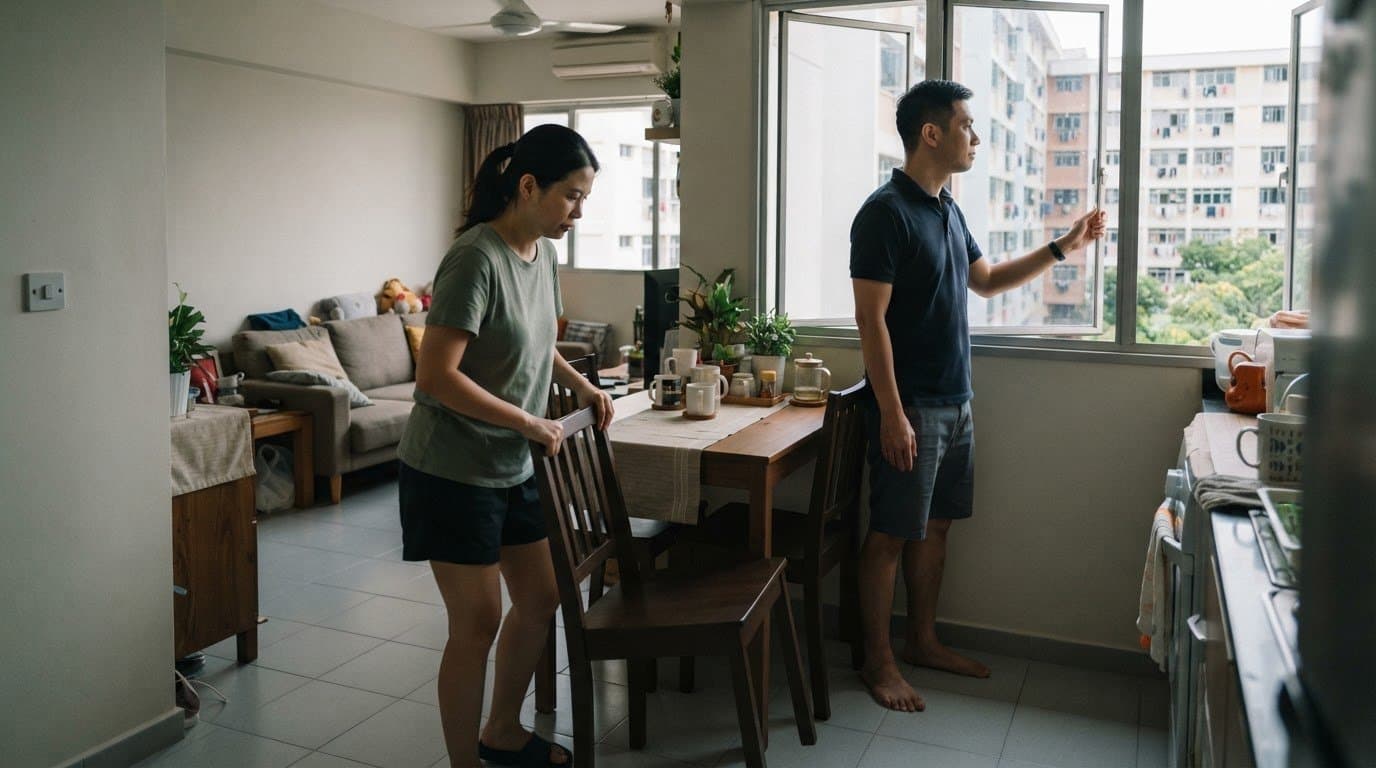
Renovate or Move House in Singapore? How to Choose in 2026
Decide whether to renovate or move house in Singapore. Compare what redesign can fix with what moving changes, and choose your next step with confidence.
Moving isn’t automatically a fresh start, and renovating can’t fix every limitation. If you’re deciding whether to renovate or move house in Singapore, focus on what your household needs next, not only on what feels familiar or appealing today.
You may love your home’s location and still find that its layout no longer works. Or you may hope a new property will solve problems that are really about storage, privacy or how your rooms function. Both choices bring disruption, so compare what each would change in your daily life.
This guide gives you a practical framework. You’ll assess which limitations renovation can address, which depend on the home or its setting, and what moving would involve. If renovation is still a possibility, FT2’s free whole-house 3D design can help you picture a new direction before you decide. It is delivered 4 to 5 days from your first appointment. The goal is a clear next step, not a rushed decision.
Key Takeaways
- Start by naming what no longer works at home before deciding whether to renovate or move.
- Separate changes a redesign could address from location and living-context changes that come with moving.
- Compare both options against your household routines, preferred layout, tolerance for disruption and need for flexibility.
- Use the renovate or move house singapore framework to list your must-haves, preferred features and non-negotiables.
- If your current home still fits your needs, explore a design direction before committing to a major change.
Table of Contents
- Renovate or Move House in Singapore? Start With What No Longer Works
- What Renovation Can Change, and What Moving Changes in Singapore
- Renovate vs Move House: Compare the Decision Across Five Priorities
- How to Decide Whether to Renovate or Move in Singapore
- Plan Your Next Chapter With FT2 Interior Design Before You Commit
Renovate or Move House in Singapore? Start With What No Longer Works
Changing your home and changing homes affect daily life in different ways. Before comparing the options, name the problem you want to solve. A crowded kitchen, limited storage or a layout that interrupts family routines may call for a different response than a location that no longer suits your household.
For the renovate or move house singapore decision, separate what can change inside the home from what depends on its surroundings. Renovation can reshape how rooms work and feel. It cannot relocate your home or change the circumstances behind a household move. This distinction gives you a practical starting point for weighing your current needs, future plans and the potential of your existing home.
Identify what is prompting the decision
Write down the everyday frustrations you want a different home to solve. Is the main issue the layout, storage, the home’s condition, a change in household size or the location? Be specific. “The living room feels cramped” points to a space problem. “The daily journey to work no longer suits us” points to a location concern.
Then consider whether each frustration is temporary or likely to shape your future. A short-term storage squeeze may have a design solution. A growing household may need more room over time. If you live in an HDB flat, the public housing framework in Singapore offers broader context on the housing landscape, including leasehold structures. Focus on how your own home and plans fit within that context.
Decide what must change and what can stay
List what you value about your current home, such as its location, familiar surroundings, natural light or a room that already serves your household well. These details help you see what you would want to preserve if you renovate and what you might give up if you move.
Next, separate design preferences from non-negotiables tied to your surroundings or household circumstances. A more functional kitchen, clearer room boundaries or improved storage may be design questions. A location requirement may not be. Keep your list short enough to use when comparing options.
- Must change: the problems affecting daily routines.
- Would improve: features you’d welcome but can live without.
- Must stay: the qualities or circumstances you don’t want to give up.
Use this priority list as your decision filter. If the essential changes are mainly about how your home functions, explore its potential before ruling out renovation. If your core need is tied to location or a household change the current home cannot support, give moving closer consideration. You’ll have a clearer basis for comparing the two paths in the next step.
What Renovation Can Change, and What Moving Changes in Singapore
Renovation and moving address different kinds of change. Renovation lets you reconsider your home’s layout, finishes and use of available space. Moving gives you a different home and may also change the setting around it, including routines and familiar surroundings your household relies on. Neither choice automatically solves every concern, so compare the specific changes you need rather than assuming one path is a complete reset.
The home type matters, too. An HDB BTO flat, an HDB resale flat and a condominium each have a different existing layout and features to plan around. Set your design priorities according to the home you have, how your household uses it and the changes you hope to make. The question of whether to renovate or move house singapore becomes clearer when you assess those details first.
What a renovation can address in your current home
Start with your routines. If several people need to use the kitchen at the same time, look at how work areas, storage and movement through the room fit together. If everyday items crowd a walkway, review where you store them and how the space is used. A Singapore kitchen renovation planning guide can offer a useful reference for thinking through these priorities.
This is space optimization in plain terms: arranging the available space to serve you better. It can improve how a room works, but it cannot remove every limitation. Some constraints belong to the existing home, and design needs to respond to what is actually there. The same applies to finishes: they can change a room’s appearance and feel, while the home’s location stays the same.
Planning also varies by home type. In an HDB BTO flat, you’ll work with the layout and features of that home. With an HDB resale flat, consider how its existing rooms and finishes relate to your priorities. For a condominium, begin with the unit and the changes you want to make within it. The useful question is not which home type is best, but whether your current one can support the way you live.
What moving may change beyond the interior
A different home could suit a changing household size or future plans more closely. It may also bring a different daily setting. Before treating that as an advantage, consider what you’d leave behind: familiar routines, surroundings and the way your current home fits into everyday life. A new address can change those things, but it does not guarantee a layout that suits you or resolve concerns about storage, room use or design.
Moving also involves property transactions, so include that in your planning. IRAS explains the applicable Buyer's Stamp Duty rates. Reviewing the relevant information helps you account for more than the floor plan, while keeping in mind that circumstances differ between households.
To get a clearer view of what your current home could become, explore FT2’s residential renovation and design services. A considered design direction can help you judge your home’s potential before deciding which kind of change fits your next chapter.
Renovate vs Move House: Compare the Decision Across Five Priorities
A side-by-side comparison turns a difficult choice into practical questions. For each priority, decide whether changes could help your current home meet the need, or whether the need points towards a different home or setting. Mark each priority as essential or negotiable. Let your essentials guide the decision, while preferences help you compare options without outweighing what matters most.
| Priority | Renovate | Move |
|---|---|---|
| Household routines | Can the current home work better if you change how rooms are arranged or used? | Would another home better support the way your household lives day to day? |
| Location | Would staying preserve access to the places and routines that matter to you? | Do your household’s location needs make a different setting essential? |
| Desired layout | Could changes to the existing layout address your main needs? | Do you need a different floor plan or more suitable home type? |
| Disruption | Can your household manage the planning and disruption involved in changing the current home? | Would the practical demands of leaving one home and settling into another feel more manageable? |
| Flexibility | Can you make changes in stages or focus on the rooms that matter most? | Would choosing a different home give you options that the current one cannot provide? |
Compare your home, location, and future needs
Start with location. Consider whether your current setting supports everyday routines, such as getting to work, school or regular activities. Then compare your existing floor plan with the space your household needs now. A layout that works today may become less suitable if you expect your household size or routines to change. Distinguish a preference for a different home from a need your current one cannot reasonably meet.
For the decision to renovate or move house in Singapore, test your preferred option against your non-negotiables. If location is essential and you want to stay, renovation may deserve a closer look. If the location itself no longer fits, redesigning the interior will not address that. If the main concern is room use, ask whether the current floor plan could support a better arrangement before concluding that you need a different one.
Compare disruption and decision flexibility
Neither path is automatically easier. Renovation means coordinating changes within a home you already know; moving means adjusting to a new home and setting. Think about your household’s capacity for planning, temporary inconvenience and uncertainty. Consider how much room you have to adjust your plans if your needs change. A realistic view of these demands is more useful than assuming one option will be simple.
Choose the path that addresses the root problem with the fewest unwanted compromises. If your essential needs point in different directions, revisit your priority list before deciding.
How to Decide Whether to Renovate or Move in Singapore
A clear decision comes from matching your household’s needs to what each option can realistically address. Before acting, agree on the essentials, consider how those needs may change, and define the renovation scope or the features you would need from a different home.
- Record how your household uses the home. Note who uses each room, when spaces feel crowded, and where daily routines become difficult. Include changes you expect, such as a household member needing more privacy or a room serving a new purpose.
- Separate essentials from preferences. Write down the changes your household needs, the features you would like, and what you don’t want to give up. Keep preferred layout changes separate from requirements such as location or space for a changing household.
- Get agreement on the priorities. Ask everyone involved in the decision to review the list. Discuss differences before planning. A shared brief helps prevent one person’s preference from being mistaken for a household-wide need.
- Test both options against the same criteria. Use the comparison across routines, location, layout, disruption and flexibility. For each priority, decide whether renovation could address it, moving is necessary, or it is negotiable. Describe what a successful outcome would look like.
- Check the practical scope before choosing. If renovation seems suitable, identify the rooms and changes involved, then consider whether the existing home can support them. If moving seems more suitable, define the location, layout and household needs a different home must meet. Consider your future plans and what renovation would actually involve before deciding.
Use your brief to choose a practical next step
If the current home still fits your essential needs, turn the brief into a focused renovation direction. Identify the outcomes that matter most, such as clearer separation between shared and private areas, more useful storage or a layout that supports everyday routines. For HDB BTO homeowners, an HDB BTO renovation packages guide can help you understand the kinds of planning decisions to consider for a new flat.
If the home no longer suits your household’s essential needs, refine your brief into requirements for a different home. Define what must be different, such as the location or the space available, and keep optional features in a separate list. This makes it easier to assess whether a potential move addresses the root problem rather than simply offering a change of scenery.
Your brief is a working tool. Revisit it as you clarify the renovation scope or your future requirements. If renovation remains practical, explore residential design planning with FT2 to assess how your current home could better support your household.
Plan Your Next Chapter With FT2 Interior Design Before You Commit
If your current home still suits your household’s location and broader needs, ask whether a considered renovation plan can address the problems you identified. The goal isn’t to make every room look different. It’s to see whether the proposed changes improve daily use while preserving the qualities you want to keep. A structured review can help you distinguish an attractive idea from a practical solution.
See a renovation direction before committing
Review the proposed design against your household brief, room by room. For each space, ask what activity it needs to support, who uses it and what currently gets in the way. Check whether the plan answers that concern instead of judging it only by appearance. For example, a storage change should make everyday items easier to access, not simply add more cabinetry.
Mark decisions that still need discussion. You might want to preserve a particular room’s purpose, change how shared areas connect or keep an existing feature that matters to your household. Separate firm requirements from details you’re open to revising. This makes feedback clearer and keeps everyone focused on outcomes as well as personal taste.
Consider trade-offs, too. A design can improve one part of a home while requiring a compromise elsewhere. Talk through those choices with the people who will use the space. If a proposal doesn’t address an essential need, explain what is missing and what a satisfactory result would look like. This gives the next round of planning a clear direction.
Move from a decision to a clear renovation plan
Once the design direction reflects your priorities, turn it into a defined scope. List the rooms involved, the intended changes and the decisions that remain open. FT2 manages residential renovation from design through final handover. Its eBuildAssist quotation itemises the project components, and one dedicated project manager provides a single point of contact. With 24/7 live CCTV access, you can view renovation progress from your phone.
Before work begins, review the proposed scope and schedule alongside your household’s commitments. The 90-Day Handover Challenge sets out a structured project delivery promise, subject to schedule. Understanding the intended sequence helps you plan around the work and follow the next steps. Keep a written record of agreed decisions so the design direction and project plan stay aligned as details are settled.
If the proposal shows a workable way to improve your current home, you can move forward with a clearer understanding of what the renovation is meant to achieve. FT2 also provides a free whole-house 3D design, delivered 4 to 5 days from your first appointment, so you can consider the design before deciding whether to proceed. Explore a residential design direction with FT2 and take the next step with a clear view of your priorities.
Make Your Next Home Decision With Confidence
The right choice isn’t necessarily the one that promises the biggest fresh start. It’s the one that addresses what your household truly needs while preserving what still matters to you. Give yourselves room to decide thoughtfully, with your priorities and future plans in view. That keeps the renovate or move house singapore question grounded in your circumstances, not assumptions about what a new home or renovation will solve.
You don’t need to settle every detail at once. Agree on the essential outcome first, then make the next decision that moves you towards it. A clear direction can turn uncertainty into a practical plan.
Choose with care, and your next chapter can begin with confidence.
Frequently Asked Questions
Is it better to renovate or move house in Singapore?
Neither is always better. The right choice depends on what your household needs to change. If you’re weighing whether to renovate or move house singapore, identify the problem first. If your main concern is how you use a room, renovation may be worth exploring. If your needs depend on a different location or home, moving may fit better. Compare each option against your non-negotiables and future plans.
Can renovating make a home feel more suitable without moving?
Yes. Thoughtful design can help your home support everyday activities, even if its size and location stay the same. You might rethink where you keep frequently used items, how a shared room serves different people or how the kitchen connects to meal routines. Write down the specific moments that feel inconvenient, then assess whether a layout or storage change could address them. Renovation can improve function, but it cannot change every feature of a home.
Should I move out during a home renovation?
It depends on the renovation scope, your household’s needs and whether the home can still support daily life while work is underway. Consider who needs a quiet place to work or study, whether essential routines can continue and how much disruption household members can manage. Discuss the expected work sequence and affected areas as part of planning. This helps you make a practical living arrangement rather than assuming everyone must stay or leave.
Does moving to a larger home always solve a space problem?
No. More floor area may help with a genuine lack of room, but it won’t automatically make a layout easier to use or solve clutter caused by storage habits. Before deciding, identify what needs more space and why. Is a room serving too many purposes, or do you need another separate area? Compare how you use your current home with the layout you would need, not just the overall size.
How do I decide if my current home still suits my family?
Check whether the home supports your household now and is likely to support changes you can reasonably anticipate. Ask each person which daily activity is hardest to manage, then note whether the issue relates to layout, location or changing household needs. A home may still suit you if its main limitations can be addressed. If an essential need depends on a different setting, that points to a broader change.
Can I see a renovation design before deciding whether to proceed?
Yes. FT2 provides a free whole-house 3D design at no cost, delivered 4 to 5 days from your first appointment, so you can review a proposed direction before deciding whether to proceed. Share a floor plan or unit address and a lifestyle brief explaining how you use the home and what you want to change. You keep the design whether or not you go ahead, and revisions are free. Use the visual plan to discuss priorities with your household.
Related Articles

20
Nov
How to Read Interior Design Floor Plans for Your Needs
Learn how to read interior design floor plans, interpret symbols and dimensions,...

19
Nov
Ergonomic Office Furniture Layout for a Productive Workspace
Plan an ergonomic office furniture layout that supports comfort and focus. Learn...
18
Nov
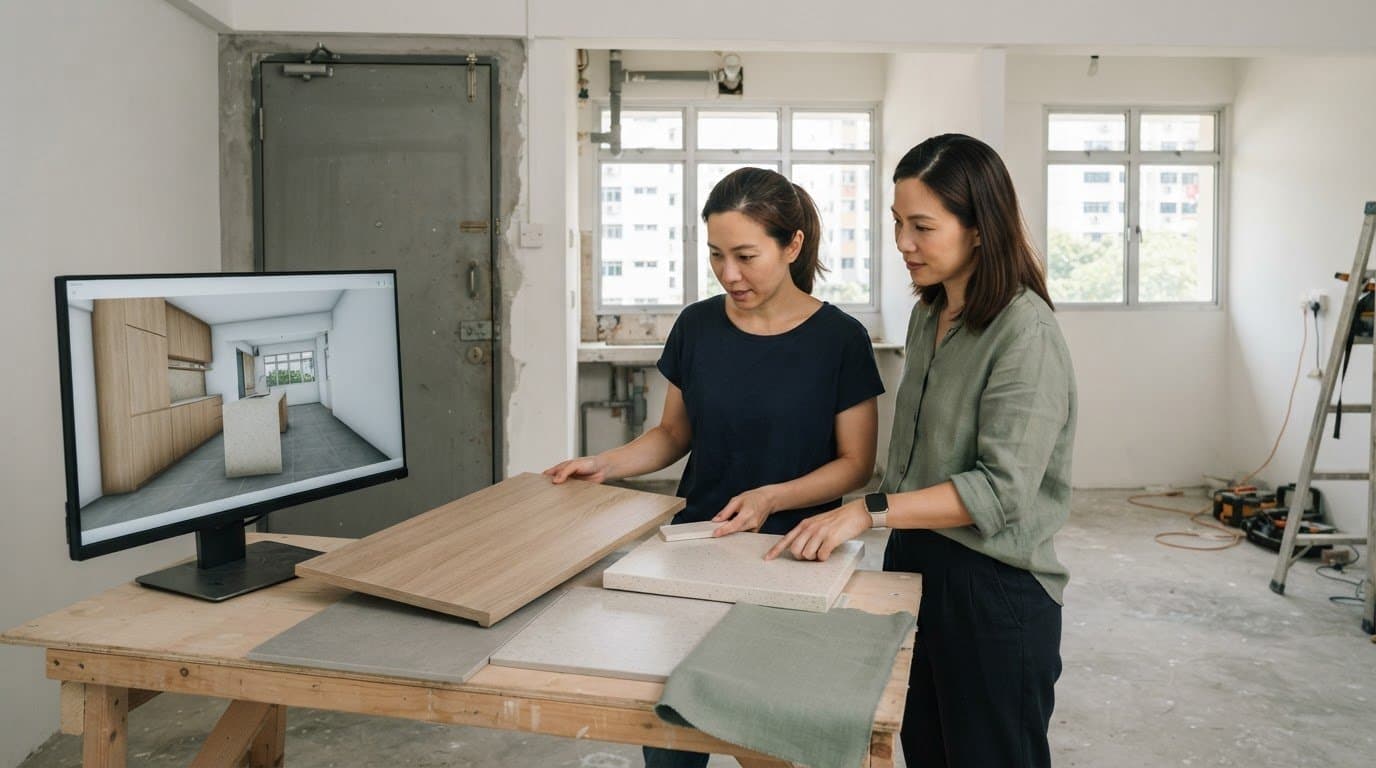
Benefits of 3D Visualization for Choosing Renovation Materials
Explore the benefits of 3D visualization for renovation: compare materials, colo...

17
Nov
Open-Concept Office Acoustic Solutions for Quieter Workspaces
Explore open-concept office acoustic solutions, from panels to zoning, and learn...

16
Nov
Modern office reception area design for a welcoming first impression
Explore modern office reception area design ideas for a welcoming first impressi...
15
Nov
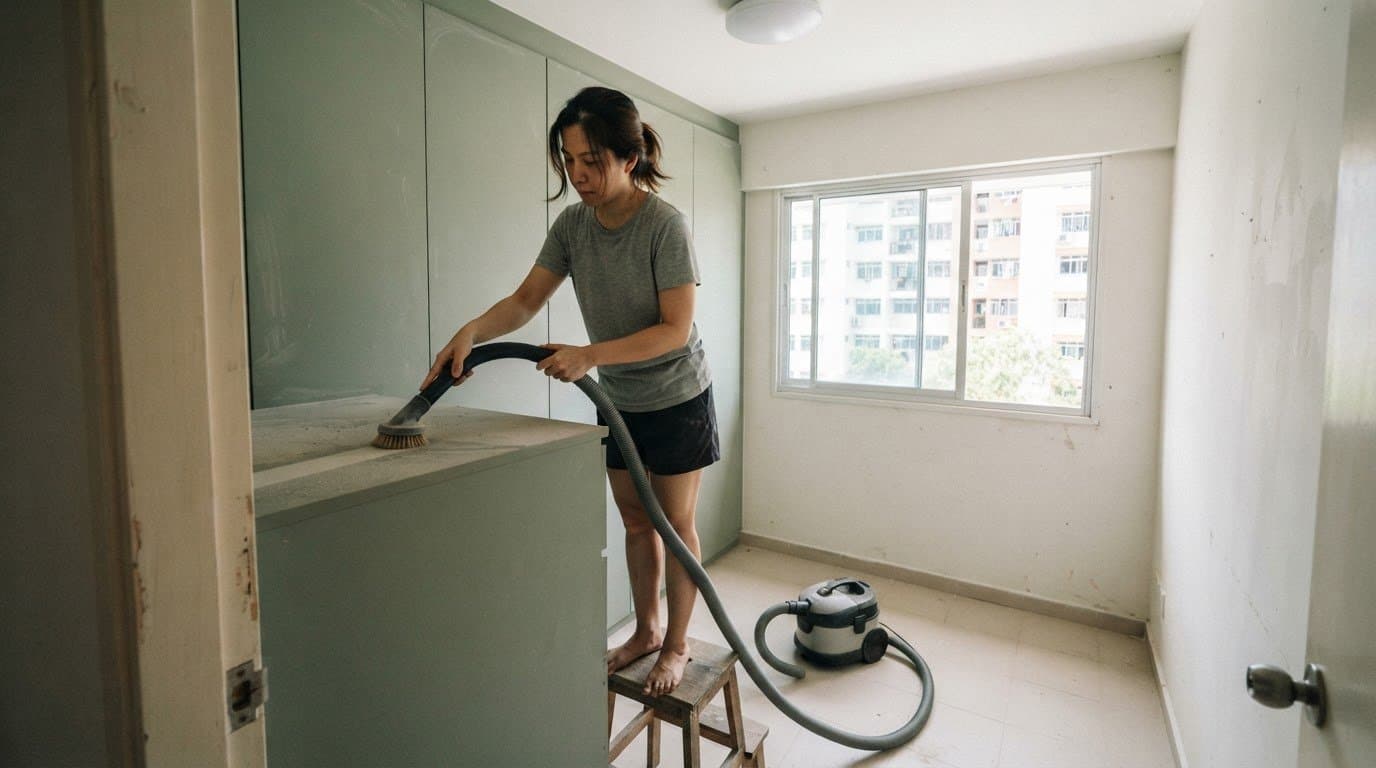
Post-Renovation Checklist Singapore: Before Moving In
Use this post renovation checklist Singapore homeowners can follow to remove fin...