
Managing Renovation Noise Complaints: Hours, Limits and Next Steps
Managing renovation noise complaints in Singapore? Learn HDB work hours, restricted noisy-work rules, neighbour tips and where to report ongoing disturbances.
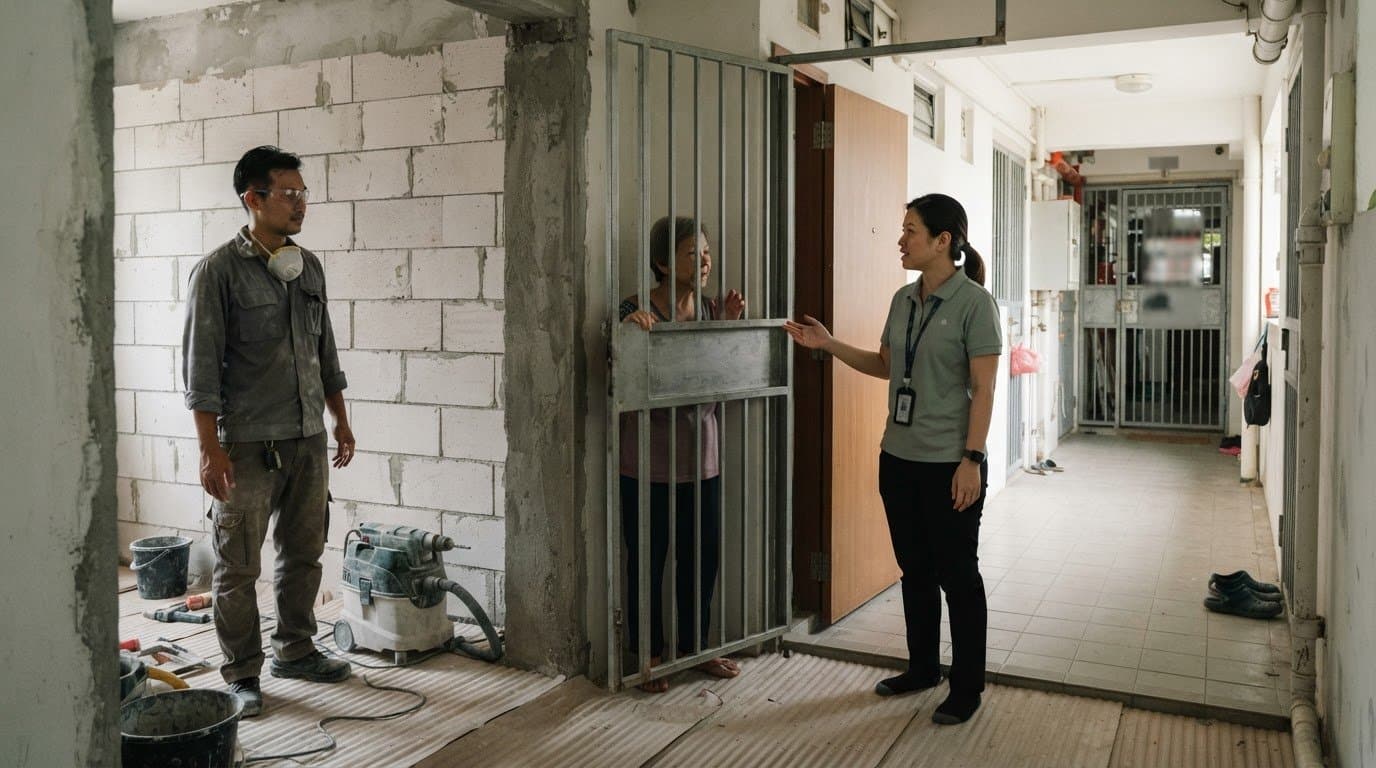
Renovation noise rules matter as much as who carries out the work. In HDB flats, ordinary renovation work is generally allowed from 9 am to 6 pm on weekdays and Saturdays, while restricted noisy work is generally limited to 9 am to 5 pm on weekdays. High-decibel renovation work is not allowed on weekends or public holidays, and loud work should avoid the 1 pm to 2 pm quiet hours. Managing renovation noise complaints starts with knowing which hours and work rules apply.
It’s reasonable to ask whether a licensed contractor can help reduce complaints. Following permitted hours, scheduling disruptive work carefully and communicating with neighbours can also prevent avoidable conflict. For landed properties, the National Environment Agency regulates noise from additions and alterations works.
This guide explains HDB renovation hours and the work most likely to concern neighbours, then outlines practical ways to give notice and respond to complaints. You’ll also learn where to report renovation noise from HDB flats, condominiums and landed properties, and what to record if the disturbance continues.
Key Takeaways
- Learn the general HDB renovation hours and how they differ for restricted noisy work, weekends and public holidays.
- Recognise examples of restricted noisy work, including wall demolition, tile cutting and heavy drilling.
- Reduce avoidable friction by sharing renovation dates and expected noisy work with neighbours in advance.
- Record when noise occurs, what work may be causing it and how it affects you before reporting a continuing disturbance.
- Find the right reporting route: HDB for noise from HDB flats, the MCST for condominium units and NEA for landed-property additions and alterations works.
Table of Contents
- What Are the Permitted Renovation Hours?
- What Counts as Unreasonable Renovation Noise?
- Reducing noise and notifying neighbours before renovating
- Reporting renovation noise from condominiums
- Renovation noise from landed properties
- FT2 Interior Design
What Are the Permitted Renovation Hours?
Permitted renovation hours are the times when HDB renovation work may take place, subject to the work type and permit conditions. In Singapore, ordinary HDB renovation work is generally allowed from 9 am to 6 pm on weekdays and Saturdays. Restricted noisy work has a shorter window: 9 am to 5 pm on weekdays.
A permit is HDB’s approval for renovation work that requires permission. Some HDB renovations need a permit; others do not. Check the renovation notice and permit conditions for the approved work, dates and hours. Conditions may impose limits beyond the general hours, so being within permitted hours does not automatically mean every activity is allowed.
A renovation notice shares information about planned work. Read it for the work period and any stated restrictions. If the notice does not seem to match the activity, record the date, time and type of noise. For example, drilling after the stated work period is useful detail when raising a concern.
HDB treats wall demolition, removal of floor or wall finishes, tile cutting, and heavy or excessive drilling as restricted noisy work. These activities are generally allowed only from 9 am to 5 pm on weekdays. Loud HDB renovation work should not take place during the 1 pm to 2 pm quiet hours. High-decibel renovation activities are not allowed on weekends or public holidays, and HDB generally does not permit renovation on Sundays or public holidays.
Saturday needs careful attention. Ordinary work may generally take place on Saturdays between 9 am and 6 pm, but high-decibel activities are prohibited on weekends. Quieter tasks, such as painting and cleaning, can be done on weekends. The work type matters more than the fact that a contractor is present.
DIY work follows different guidance from permitted contractor renovation work. HDB advises residents to limit DIY work to between 7 am and 10.30 pm and keep noise to a minimum. Those hours do not override the restrictions on permitted renovation activities.
The Housing & Development (Renovation Control) Rules 2006 require HDB flat owners to engage contractors from the Directory of Renovation Contractors for renovations in their flats. HDB’s general and technical terms and conditions apply to HDB renovation work, including technical requirements for listed work types. Check whether planned work requires a permit before it starts, then follow the permit’s conditions and the applicable time limits.
There is no single fine amount that reliably applies to every breach; consequences depend on the requirements and circumstances. If you observe work outside permitted hours, record the time and activity, then submit feedback to HDB.
What Counts as Unreasonable Renovation Noise?
Unreasonable renovation noise is excessive or poorly managed in relation to the work taking place. Loudness alone does not tell the whole story. Consider whether the sound is continuous, repeatedly disruptive or interfering with normal use of nearby rooms. A brief burst of unavoidable construction noise differs from a preventable disturbance that continues without a clear work-related reason.
Assess how the noise affects your home, not just how loud it sounds. Intermittent noise, for example, may repeatedly interrupt a conversation or make it difficult to concentrate, while steady background sound may have less impact. Describe what you experience clearly, without guessing which tool or task caused it. A complaint raises a concern to investigate; on its own, it does not prove that a contractor breached a requirement.
An HDB flat owner remains responsible for the renovation and must ensure the contractor follows HDB guidelines. That includes taking a neighbour’s report seriously and asking the contractor to clarify the activity. If the reported noise seems unrelated to the planned task, have the work area and activity checked before dismissing the concern.
A contractor helps manage the work, but the owner should stay involved in resolving concerns. Share the neighbour’s description with the contractor and ask for a clear explanation of the activity. For instance, confirm whether repeated impact sounds are part of the current task or point to an issue that needs attention. Specific information is more useful than debating whether someone is “too sensitive.”
Compromising over disruptive work means acknowledging the effect on neighbours while allowing necessary work to proceed. Start by identifying the main source of friction, such as repeated interruptions or a particularly disruptive task. Discuss a practical adjustment with the contractor and affected neighbour, then agree how to share updates if the situation changes. Keep the conversation respectful and focused on the issue.
If you are planning an HDB renovation, a clear scope and coordinated work sequence can make it easier to explain what is happening and address concerns. HDB renovation planning can help organise the project before work begins. For neighbours, explain the specific impact you need resolved; for owners, acknowledge the concern and follow through on the agreed response. Clear accountability gives both households a constructive way forward.
Reducing noise and notifying neighbours before renovating
If HDB renovation noise continues outside permitted hours, record the date, time, likely work type, duration and impact. Raise the concern calmly with the neighbour or contractor. If it continues, submit feedback directly to HDB.
Advance notice, practical noise controls and a clear schedule help neighbours prepare for disruptive work. Use the steps below to set expectations and address concerns constructively.
Reducing Renovation Noise
Noise reduction means limiting sound from renovation tools and containing noise around the work area. Before work begins, discuss quieter options with the contractor, such as electric screwdrivers instead of traditional drills where suitable.
Temporary sound-absorbing panels or screens around the work area can reduce noise leakage. Acoustic mats or soundproofing blankets can absorb some renovation noise, too. These measures do not replace permitted hours, but can reduce disturbance during them.
Adjusting Work Schedules
Adjusting the schedule means arranging disruptive tasks to reduce their impact on neighbours. Ask the renovating household for programme dates, including the specific days when hacking is planned, so you can anticipate the noisiest stages.
If you are renovating, share the schedule with your contractor and discuss whether tasks can be arranged to limit repeated disruption. If a neighbour raises a concern, respond promptly and consider a practical compromise, such as changing the work sequence. Any adjustment must still follow applicable permit conditions and work-hour restrictions.
Notifying Neighbours of Renovation Plans
A renovation notice gives nearby residents advance information about planned work and timing. Share the renovation dates, expected noise levels and the days scheduled for the loudest work, such as hacking.
A written notice in a shared public area helps neighbours refer to the schedule. Include a way to contact the renovating household or its contractor, if available, so residents can raise concerns directly. Update the notice if key dates change; an outdated schedule can cause avoidable confusion.
Neighbour Communication and Mediation
Neighbour communication is a calm, specific exchange about the noise and its effects. If you are affected, explain what you heard, when it happened and how it disrupted you, rather than assuming what caused it.
If you are renovating, listen, acknowledge the inconvenience and discuss a workable response. The contractor can clarify which task is underway and when it is scheduled to finish. If direct discussion does not resolve the issue, record dates, times, work type, duration and impact before submitting feedback to HDB.
Reporting renovation noise from condominiums
Send condominium renovation complaints to the development’s Management Corporation Strata Title (MCST), HDB noise feedback to HDB, and feedback about landed-property additions and alterations noise to NEA. Contact the MCST using the details in the list of MCSTs, submit feedback directly to HDB, or use NEA’s Online Feedback Form (OFF).
Condominium Noise Complaint Procedures
A condominium noise complaint is a report to the MCST managing that residential development. Each condominium has its own MCST, so start with your development’s contact details in the list of MCSTs.
Describe the disturbance clearly. Record the date, time, likely work type, duration and impact, such as drilling that interrupts a work call. Include the building and unit location, and note whether the sound is ongoing or intermittent. Keep your observations factual, separating what you heard from what you think caused it.
Send the information to the MCST through its available contact channel and keep a copy of your report. If the noise continues, add new dates and times instead of relying on one general description. A seven-day complaint plan can help organise observations and follow-up, but it is not a statutory waiting period. Report urgent hazards or clearly prohibited work promptly.
If you live in the renovating unit, take a complaint seriously and respond promptly. Acknowledge the disruption, identify the task causing it, and discuss a practical adjustment with the contractor or affected neighbour. Share relevant schedule details with the MCST if needed. Clear records help everyone focus on the work and timing at issue.
Complaint Procedures by Property Type
Complaint procedures depend on the property type, its management and the source of the noise. For an HDB flat, affected residents can submit feedback directly to HDB. For a condominium, report the issue to the development’s MCST.
For noise from additions and alterations works in a landed property, submit feedback through NEA’s Online Feedback Form (OFF). NEA regulates noise from these works and provides information on allowable working hours and permissible noise limits. The right reporting route depends on whether the work is in an HDB flat, condominium unit or landed property.
Before reporting, organise the key details: date, time, likely work type, estimated duration and impact. For example, note whether repeated drilling disrupted your home, rather than simply reporting that noise occurred. Include a concise account of any discussion with the renovating household.
There is no single reporting channel for every residential property type. Send HDB feedback to HDB, condominium feedback to the relevant MCST, and feedback about landed-property additions and alterations to NEA. Use the route that matches the property and keep your records for follow-up.
Renovation noise from landed properties
For landed homes, renovation noise rules differ from the HDB process because the work follows a separate regulatory route. The National Environment Agency (NEA) regulates noise from additions and alterations works in landed properties. This distinction matters when deciding where to report a complaint and which guidance to consult.
Additions and alterations (A&A) works are changes or improvements to a landed property. NEA provides information on allowable working hours and permissible noise limits for these works. Consult that information when assessing a concern; do not assume HDB renovation hours or condominium procedures apply to a landed home.
If noise from landed-property A&A works affects you, submit feedback through NEA’s Online Feedback Form (OFF). Describe the disturbance specifically, noting the date, time, likely activity, duration and impact, such as repeated drilling disrupting a call at home. A clear account helps distinguish a brief task from recurring noise.
Keep your report factual, separating what you observed from what you think may be happening. For example, write that you heard cutting sounds during a stated period rather than naming a tool unless you recognised it. If the noise occurs again, add the new dates and times to your record. This creates a useful timeline for your feedback.
The homeowner and renovation contractor should treat a noise complaint as a prompt to communicate. If you receive one, respond promptly, apologise for the inconvenience and discuss a practical compromise. Explain which work is causing the disturbance and share the remaining schedule. If an adjustment is possible, agree clearly on the revised timing while keeping the work within applicable requirements.
If you are the affected neighbour, a calm, specific conversation can clarify whether the noise is linked to A&A work and whether the schedule can change. If direct discussion does not resolve the issue, submit feedback through NEA’s OFF. The key is to identify whether the property is landed, consult NEA’s A&A information, then report through the channel intended for that work.
Planning a landed renovation? Discuss your landed property renovation with a team that can organise the design and work sequence.
FT2 Interior Design
FT2 Interior Design helps you plan a renovation with clear scope and an organised work sequence. If you are preparing for HDB, condominium or landed-property works, structured planning can help you understand what happens at each stage and when disruptive tasks are scheduled.
FT2 Interior Design provides HDB BTO Home Renovation, HDB Resale Home Renovation, Condominium Home Renovation and Landed Property Interior Design. Discuss your home, renovation priorities and concerns about noise so the project plan can account for the work involved and communication with neighbours.
For your renovation plans, contact FT2 Interior Design to discuss your home and next steps.
Plan Your Next Renovation With Neighbours in Mind
A renovation plan should account for more than layout and finishes. It can make neighbour communication part of the process, with clear expectations for disruptive work and a considered response if concerns arise. That gives you a practical starting point for managing renovation noise complaints before they become harder to resolve.
FT2 Interior Design offers HDB BTO Home Renovation, HDB Resale Home Renovation and Condominium Home Renovation. If you are planning one of these projects, discuss how the work sequence and communication with nearby residents can fit into your renovation plan.
Take the next step when you are ready to discuss your home and renovation priorities. Contact FT2 Interior Design to start the conversation with clarity.
Frequently Asked Questions
Does a Licensed Contractor Reduce Complaints?
A contractor who follows HDB requirements can help prevent avoidable complaints, but a licence alone does not ensure quiet work. For HDB renovations, the Housing & Development (Renovation Control) Rules 2006 require owners to engage contractors from HDB’s Directory of Renovation Contractors. The flat owner remains responsible for ensuring work follows HDB guidelines. Agree on the noisy-work schedule with the contractor and communicate any changes to neighbours promptly.
How Long Will the Noise Actually Last?
Noise depends on the work, its sequence and the daily schedule. Hacking, tile cutting and heavy drilling cause concentrated disruption while underway; painting and cleaning are quieter examples. Ask for the renovation programme and planned dates for disruptive work. If the schedule changes, update affected neighbours. The duration and repetition of a task matter more than the overall renovation period.
Is Renovation Allowed on Saturday and Sunday?
Ordinary HDB renovation work is generally allowed on Saturdays from 9 am to 6 pm, but high-decibel work is not allowed on weekends or public holidays. HDB generally does not permit renovation on Sundays or public holidays. Quieter activities such as painting and cleaning can be done on weekends. For condominium and landed-property work, follow the relevant MCST requirements or NEA information rather than assuming HDB hours apply.
What Happens After You File a Complaint?
After you submit a complaint, the relevant body receives it for handling. Include the property type, location, dates, times, likely work and impact so the concern is specific and useful. Keep a copy and add new observations if the disturbance continues. Reporting routes vary by property: HDB for HDB flats, the MCST for condominiums, and NEA for noise from landed-property additions and alterations.
What if DIY noise occurs after the contractor leaves?
DIY work is separate from a contractor’s permitted renovation schedule. HDB advises residents to limit DIY work to between 7 am and 10.30 pm and keep noise to a minimum. If a neighbour’s DIY noise continues, note when it happens and what activity you can identify. Speak calmly with the resident first where appropriate. For ongoing noise from an HDB flat, submit feedback directly to HDB with your observations.
Which Renovation Phases Are the Loudest?
HDB identifies demolition and surface-removal work among the disruptive activities. Examples include wall demolition, removing floor or wall finishes, tile cutting, and heavy or excessive drilling. These are restricted noisy works in HDB flats. The sequence depends on the renovation scope, so the programme can show when these tasks are planned. Ask which dates involve hacking or similar work to anticipate peak disruption.
What are Singapore's permitted renovation hours for HDB flats and private homes?
For HDB flats, ordinary renovation work is generally allowed from 9 am to 6 pm on weekdays and Saturdays. Restricted noisy work is generally limited to 9 am to 5 pm on weekdays, with loud work avoiding 1 pm to 2 pm. High-decibel work is not allowed on weekends or public holidays. For landed-property additions and alterations, consult NEA’s information on allowable hours and noise limits; condominium rules are managed by each MCST.
Where and how can residents report renovation noise in Singapore?
Residents can report noise from HDB flats directly to HDB, condominium noise to the development’s MCST, and landed-property additions and alterations noise to NEA through its Online Feedback Form. Include dates, times, likely work type, duration and impact. For critical safety matters such as fallen windows or wall collapse, HDB lists 1800 455 0089 as its emergency hotline. Report urgent hazards promptly.
Related Articles
11
Nov
Renovation Loan vs Personal Loan in Singapore: Compare Costs
Compare renovation loan vs personal loan Singapore by permitted uses, rates, rep...
10
Nov
Feng shui for your HDB main door, starting with your new home
Explore feng shui for hdb main door placement, nearby corridors and door alignme...

09
Nov
How to Plan Your BTO Renovation Before You Collect the Keys
Learn how to plan your BTO renovation before key collection, compare proposals, ...
08
Nov
How to Save Money on HDB Renovation, Furnishings and Appliances
Learn how to save money on hdb renovation by prioritising essential work, keepin...

07
Nov
How to Budget for a 5-Room BTO Renovation: Costs and Choices
Learn how to budget for 5-room BTO renovation in Singapore with practical guidan...
06
Nov
Ideas for HDB Bomb Shelter Doors, Rules and Space
Explore bomb shelter renovation ideas hdb homeowners can use to style the door, ...