
Energy Efficient Home Design Singapore: A Guide to Sustainable Renovation
Plan your energy efficient home design singapore to stay cool and cut utility bills. Get itemised renovation pricing and our 90-day handover guarantee now.
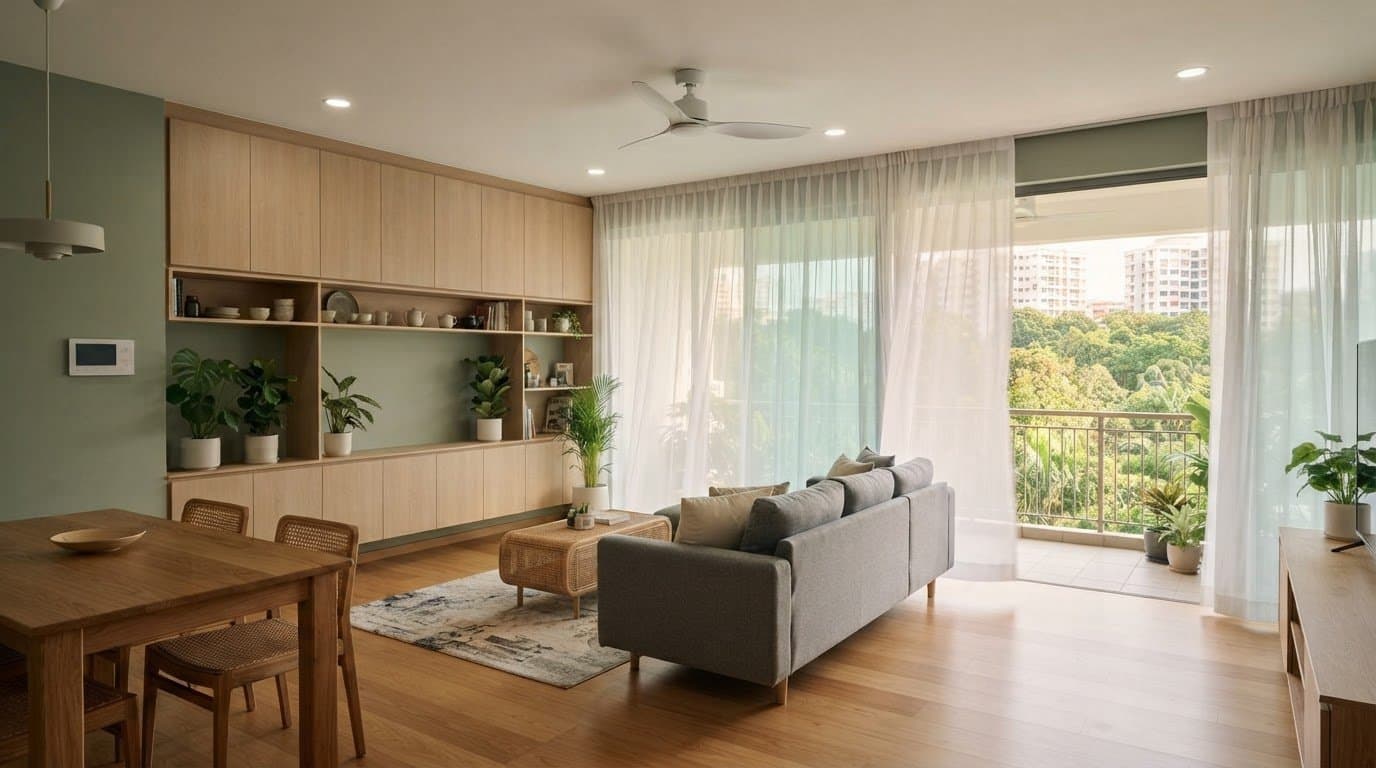
What if a cooler home starts with your renovation plan, not just a more powerful air-conditioner? If Singapore’s heat is driving up your utility bills, appliances may be the first thing you think about. But your layout, airflow and material choices can also affect how comfortable your home feels. Energy efficient home design singapore brings these decisions together instead of relying on one upgrade.
This guide covers practical ways to plan a cooler, more sustainable home. You’ll learn how to assess natural light and ventilation, compare appliance energy labels, and understand what Green Mark ratings do and don’t tell you about a home.
Clear project information can also help you make informed renovation decisions. FT2’s EBA quotation system itemises renovation selections for review, while its 90-Day Renovation Handover Challenge sets out a defined project timeline. Consider these details alongside your design priorities, project scope and handover terms.
Key Takeaways
- Plan energy efficient home design singapore around how you use each room, so the layout supports comfort and daily routines.
- Review furniture placement and room layouts for possible airflow obstructions, especially in compact BTO homes.
- Consider LED lighting and smart climate controls as part of a wider plan for a more comfortable, efficient home.
- Use the initial consultation to explain your sustainability priorities, then review renovation selections through FT2’s itemised EBA quotation system.
- Understand the project schedule and applicable terms for FT2’s 90-Day Renovation Handover Challenge, including its 50% deposit refund guarantee if handover misses the deadline.
Table of Contents
- Why Energy Efficient Home Design is Vital for Singapore Homeowners
- Passive Cooling and Space Optimization Strategies
- Active Energy Solutions: Lighting and Smart Systems
- Planning Your Green Renovation with Transparent Communication
- Achieving Sustainability via the 90-Day Renovation Handover Challenge
Why Energy Efficient Home Design is Vital for Singapore Homeowners
In Singapore’s tropical climate, heat entering through sun-facing windows and building surfaces can keep rooms warm after the sun moves. If your home heats up quickly, you may rely more on air-conditioning for comfort. Energy efficient home design singapore means planning your interior to support comfort and avoid unnecessary energy use, rather than treating appliances as the only solution.
The principles behind a passive house approach offer a useful reference: design choices can help limit energy demand. In an apartment renovation, consider sunlight, airflow and how you use each room together. The aim isn’t to promise a naturally cool home in every condition. It’s to make choices that may reduce heat build-up and support more comfortable living.
Combating the Tropical Heat
Start by noting which rooms receive direct sun and at what times. Suitable window coverings can help manage sunlight, while clear paths between openings may help air move through a room. Avoid placing bulky furniture in front of windows or ventilation openings. These details matter in HDB flats and condominiums, where room layouts and openings affect how heat is experienced at home.
Thermal comfort involves more than lowering the air-conditioner setting. Consider how you use each space, where sunlight falls and whether air can circulate. A well-planned room may feel more comfortable without relying on air-conditioning at every moment. You can still use active cooling when it suits your needs.
Financial and Environmental Benefits
Using less electricity can help lower household bills, though results depend on household habits, weather and appliance use. A renovation plan that considers lighting, cooling needs and room layout from the start can help you avoid choices that work against one another. Careful project coordination also keeps decisions connected, from the initial layout to material selection and installation.
Energy efficiency can support Singapore’s wider sustainability direction, including the goals of the Singapore Green Plan 2030. Practical choices needn’t compromise your interior style. Durable finishes, well-planned lighting and thoughtful use of natural light can support both the appearance and function of your home. These features may appeal to future buyers who value comfort and energy awareness, but they don’t guarantee a higher resale value.
Begin with conditions you can observe: which rooms feel warm, when sunlight enters and how you use each space. These observations give you a practical starting point for an energy-conscious design brief.
Passive Cooling and Space Optimization Strategies
Passive cooling starts with your floor plan. In a 3-room or 4-room BTO, furniture, partitions and storage can interrupt airflow even when windows are open. For energy efficient home design singapore, consider possible airflow paths before finalising the layout. Cross-ventilation depends on the position of openings and outdoor conditions, so no single arrangement can guarantee a cooler room.
Natural Ventilation and Layout Design
An open-plan layout may help air move between connected areas, but removing walls isn’t always necessary. Keep likely airflow paths clear: avoid placing tall cabinets in front of windows, and consider open shelving or carefully positioned partitions where privacy is needed. Use space optimization to make circulation routes work better, rather than filling every available corner with storage.
Singapore’s Building Control Regulations set natural ventilation requirements for residential buildings. Rooms should be no more than 12 metres from a ventilation opening, and the opening should be at least 5% of the room’s floor area. These are building design requirements, not a renovation checklist for altering your flat. Before changing windows or other building elements, check the applicable HDB requirements and, for a condominium, the management’s rules.
At your initial consultation, explain which rooms feel stuffy and how you use them. Your renovation team can review the proposed layout, furniture positions and partition locations against those needs. For a broader reference on building sustainability, the BCA Green Mark certification information explains Singapore’s building sustainability framework.
Material Selection for Cooler Interiors
Materials affect how a room feels, but a surface that feels cool to the touch doesn’t necessarily improve the temperature of the whole room. Surfaces with lower thermal mass generally store less heat than heavier materials, while sunlight, ventilation and indoor conditions also affect comfort. Ask your designer how proposed finishes suit the room’s exposure and use. Light-coloured finishes may reflect more light and help limit solar heat absorption on exposed surfaces, although the effect depends on where and how they’re used.
Window coverings can reduce direct sun entering your home. Solar films are another option to investigate, but check their suitability for your windows and confirm any HDB or condominium requirements before selecting or installing them. Don’t assume a product is approved for every home.
For carpentry, ask about a laminate’s environmental information and durability rather than relying on a broad “eco-friendly” label. Thoughtful material choices and skilled craftsmanship can support a lasting interior without compromising its design. If you’re planning an HDB or condominium renovation, explore FT2’s renovation services and discuss airflow and finish options as part of your layout planning.
Active Energy Solutions: Lighting and Smart Systems
Passive design can help limit heat gain, but your lighting, cooling and appliance choices also affect electricity use. For energy efficient home design singapore, plan these systems alongside your renovation layout. Switches, sockets and appliance locations should suit the way you use each room.
Smart Lighting and Automation
LEDs generally use less electricity and release less heat than traditional incandescent bulbs. Instead of lighting an entire home from one switch, consider separate zones for areas such as the kitchen worktop, dining table and living room. You can then light only the spaces in use. Choose suitable brightness and colour temperature for each task, and include convenient switch locations in your electrical plan.
Timers and smart controls can help you manage air-conditioning and water heaters around your routine. For example, you could set a timer so cooling doesn’t continue after you leave a room. Depending on the system, sensors can trigger lighting or controls based on detected movement or conditions. Before choosing a system, ask which devices it connects to and which settings you can control.
3D visualisation can help you review a proposed layout before work begins. Use it to check whether planned electrical points suit your furniture, task lighting and appliance locations. Reviewing these details early can help you avoid inconvenient switches or outlets after the renovation is complete.
Efficient Appliance Integration
Plan your kitchen around the appliances you intend to use. Check their dimensions, power requirements and ventilation guidance before finalising cabinetry and electrical points. Keep ventilation paths clear and follow the appliance maker’s installation instructions. Built-in units need particular attention because enclosed spaces can restrict airflow if the design doesn’t allow for it.
For regulated household appliances, compare the NEA Energy Label and efficiency information for products in the same category. Singapore’s Energy Labelling Scheme covers items including air-conditioners, refrigerators, clothes dryers, televisions, household water heaters and lamps. Labels help with comparisons, but your usage habits and the appliance’s suitability for your household matter too.
During renovation planning, map out which appliances and systems will operate in each area, then confirm electrical requirements with the appropriate professionals. The NUS sustainable building research provides wider context on sustainable buildings and facilities management. At home, coordinate lighting, controls and appliance placement before installation so the design works as a whole.
Planning Your Green Renovation with Transparent Communication
A clear renovation plan turns sustainability goals into decisions you can review. For energy efficient home design singapore, decide what matters most in your home: reducing heat, making better use of daylight, choosing durable finishes or planning for efficient appliances. Share these priorities at your initial consultation so they can inform the layout, material selections and project sequence.
The Role of the EBA Quotation System
Green renovation choices can involve different materials and specifications. Ask for each proposed selection to be described clearly, including where it will be used and its intended purpose. FT2’s EBA quotation system provides itemised quotations, helping you review planned work and selected materials in an organised format. You can then compare options and discuss changes before they move into the renovation process.
Transparent communication also means confirming what’s included, what depends on your final selection and how requested changes will be recorded. Rather than relying on a broad label such as “sustainable package,” review the actual finishes and products specified for your home. Ask your renovation team or suppliers for relevant product information, and check that alternatives meet your design needs.
Before approving materials, check the warranty terms and what they cover. FT2 provides a 24-month warranty on materials. Confirm how it applies to the specific materials selected, as coverage can vary between products and suppliers.
Initial Consultation and Space Planning
Use the initial consultation to explain how you want your home to feel and function. A Senior Interior Designer can help translate your priorities into a practical design brief and floor plan. Discuss where you need daylight, how you use each room and which areas become uncomfortable in warm weather. This context helps inform layout and material decisions.
If you’re considering solar films or tinted glass, treat them as options to assess, not automatic solutions. Suitability depends on your windows and home, and HDB or condominium requirements may apply. Check the relevant requirements before committing, and ask how each option may affect daylight and your view.
Agree on a project roadmap that records key decisions, selection deadlines and the planned sequence of work. FT2’s 90-Day Renovation Handover Challenge provides a defined handover timeline, with a 50% deposit refund guarantee if the renovation is not handed over within 90 days. Clear scope and timely decisions help keep project delivery organised.
To discuss your priorities and layout, explore FT2’s home renovation services.
Achieving Sustainability via the 90-Day Renovation Handover Challenge
Sustainability also depends on how a renovation is managed. A clear sequence for approvals, material selections, deliveries and installation can help reduce avoidable rework and prevent materials from being ordered too early or left unused. It won’t eliminate all construction waste, but disciplined project delivery makes decisions affecting the work easier to track.
For energy efficient home design singapore, a defined timeline can also help you plan your move around the renovation. A confirmed handover target makes it easier to arrange your next steps, but it isn’t a guarantee of lower utility use or savings on temporary arrangements. Those outcomes depend on your circumstances and how you use your home.
Efficient Project Delivery and the 90-Day Guarantee
FT2’s 90-Day Renovation Handover Challenge sets a target of completing a home renovation within 90 days. FT2 states that if handover misses this deadline, it will return 50% of the deposit. Review the project scope, timeline and guarantee terms before committing, so you understand what the challenge covers and what’s required from you during the process.
A structured schedule can help align trades and material deliveries with each stage of work. Clear decisions and timely updates matter too. Ask how your project team will track progress, raise issues and confirm changes. This gives you a practical way to follow the renovation and supports careful workmanship without treating speed as a substitute for quality.
Long-term Reliability and Warranty
After handover, follow the care instructions for your finishes, appliances and installed systems. Keep ventilation paths clear, use products as their manufacturers recommend, and arrange servicing according to equipment documentation. If an energy-related feature isn’t working as expected, check the product guidance and warranty terms before arranging repairs or replacements.
FT2 provides a 24-month warranty on materials. Confirm which selected materials are covered and how to raise a warranty matter, since material warranties don’t necessarily cover every appliance, installation or maintenance issue. Keep your selection and handover information organised so you can refer to product details later.
A reliable renovation plan connects design choices, project coordination and clear handover information. To discuss a renovation for your home, contact FT2 Interior Design.
Plan a Cooler, More Efficient Home with Confidence
Lasting energy efficiency comes from coordinated choices, not one product or upgrade. A layout that supports airflow, lighting you can control by zone and carefully selected appliances can all contribute to a more comfortable home. With energy efficient home design singapore, start by identifying what matters most in your daily routine, then include those priorities in your renovation plan.
Clear project information matters too. FT2’s EBA quotation system provides itemised quotations, while the 90-Day Renovation Handover Challenge sets a defined timeline with a 50% deposit refund guarantee if handover misses the deadline. FT2 also provides a 24-month warranty on materials. Review the scope, timeline and warranty terms to understand what applies to your project.
Discuss your home’s layout, comfort needs and sustainability priorities during an initial consultation. Book your initial consultation for a sustainable home today. With a clear plan and informed choices, you can work towards a home that feels more comfortable and functions better for you.
Frequently Asked Questions
What is the most effective way to cool a Singapore HDB without air-con?
Start by reducing direct sun and keeping airflow paths clear. Use suitable window coverings to shade rooms, and position furniture so it doesn’t block windows or ventilation openings. A fan can help circulate air when conditions allow. The best approach depends on your flat’s layout, window orientation and daily routine, so energy efficient home design singapore should respond to the conditions in your own home. These steps can improve comfort, but they can’t guarantee you’ll never need air-conditioning.
How does energy-efficient home design affect renovation planning in Singapore?
Energy-conscious design can influence your layout, material selections, appliance choices and project sequence. Decide which outcomes matter most, such as better airflow, reduced heat from lighting or efficient appliances, then discuss those priorities during the initial consultation. Ask for selected products and planned work to be documented clearly, so you can review how each choice supports your goals before approving the renovation plan.
Can I use smart home tech to reduce my energy consumption?
Yes. Smart timers, occupancy sensors and controllable lighting can help you avoid running systems when they aren’t needed. For example, you might schedule air-conditioning around your routine or switch off lights in an unoccupied area. Results depend on your settings and habits. Before choosing a system, check which devices it controls, whether it works with your appliances and whether you can still operate each device manually.
What should I look for in an energy-efficient renovation package?
Look for clearly specified work and products instead of relying on a general “energy-efficient” package label. Check appliance energy labels, product details, warranty coverage, ventilation requirements and the project timeline. Ask for an itemised quotation that identifies selections and related work. Confirm which choices are included in the agreed scope, how changes will be documented and whether the materials suit your home’s conditions and maintenance needs.
Do sustainable materials require more maintenance in our climate?
Not automatically. Maintenance depends on the material, its finish, where it’s installed and the care instructions provided by its manufacturer. Before selecting a product, ask how to clean it and whether it’s suitable for the intended area, especially near water or in spaces with limited ventilation. Keep the product information and warranty details after handover. Following the recommended care routine helps you protect the finish and assess its long-term suitability.
How does the EBA quotation system help with sustainable renovations?
The EBA quotation system provides clear, itemised renovation quotations, so you can review specified materials and work before confirming your choices. For a sustainable renovation, ask your designer to identify proposed finishes or products and explain their intended use. You can then compare the documented options, confirm what’s included and discuss changes transparently. The system organises selections; it doesn’t independently verify a product’s environmental claims.
What is the 90-Day Renovation Handover Challenge and how does it help?
The 90-Day Renovation Handover Challenge is FT2’s commitment to hand over a home renovation within 90 days. FT2 states that it will return 50% of the deposit if handover misses the deadline. A clear target can help you plan around the renovation and follow project progress. Ask for the project scope, timeline and applicable guarantee terms in writing so you understand how the commitment applies to your project.
Are there any Singapore government grants for energy-efficient home designs?
Don’t assume a grant applies to an individual home renovation. The Green Mark Incentive Scheme for Existing Buildings 2.0 supports private building owners undertaking energy-efficiency retrofits to achieve higher Green Mark ratings. The scheme is available until 31 March 2027 or until funds are depleted. Check the Building and Construction Authority’s current scheme details to confirm eligibility and terms before making plans.
Related Articles
29
Sep
Apply for HDB Renovation Permit in Singapore (2026 Guide)
Learn how to apply for hdb renovation permit in Singapore. Check rules, register...
27
Sep
Pet-Friendly Flooring for HDB Flats: The 2026 Buying Guide
Discover the best pet-friendly flooring for hdb flats. Compare SPC vinyl and til...
26
Sep
Home Reno SG: A First-Time BTO Owner’s Checklist for 2026
Plan your home reno sg smoothly. Follow our 2026 BTO owner checklist to organise...
25
Sep
Renovation Contractor vs Interior Designer in Singapore: How to Choose
Choosing between a renovation contractor and an interior designer in Singapore? ...
24
Sep
Why CaseTrust is Essential for Your Singapore Renovation
Learn how case trust accreditation protects your deposit with performance bonds ...
23
Sep
Office Renovation Cost Singapore: What Shapes Your Project in 2026
Compare office renovation cost Singapore proposals with ease. Learn what shapes ...