
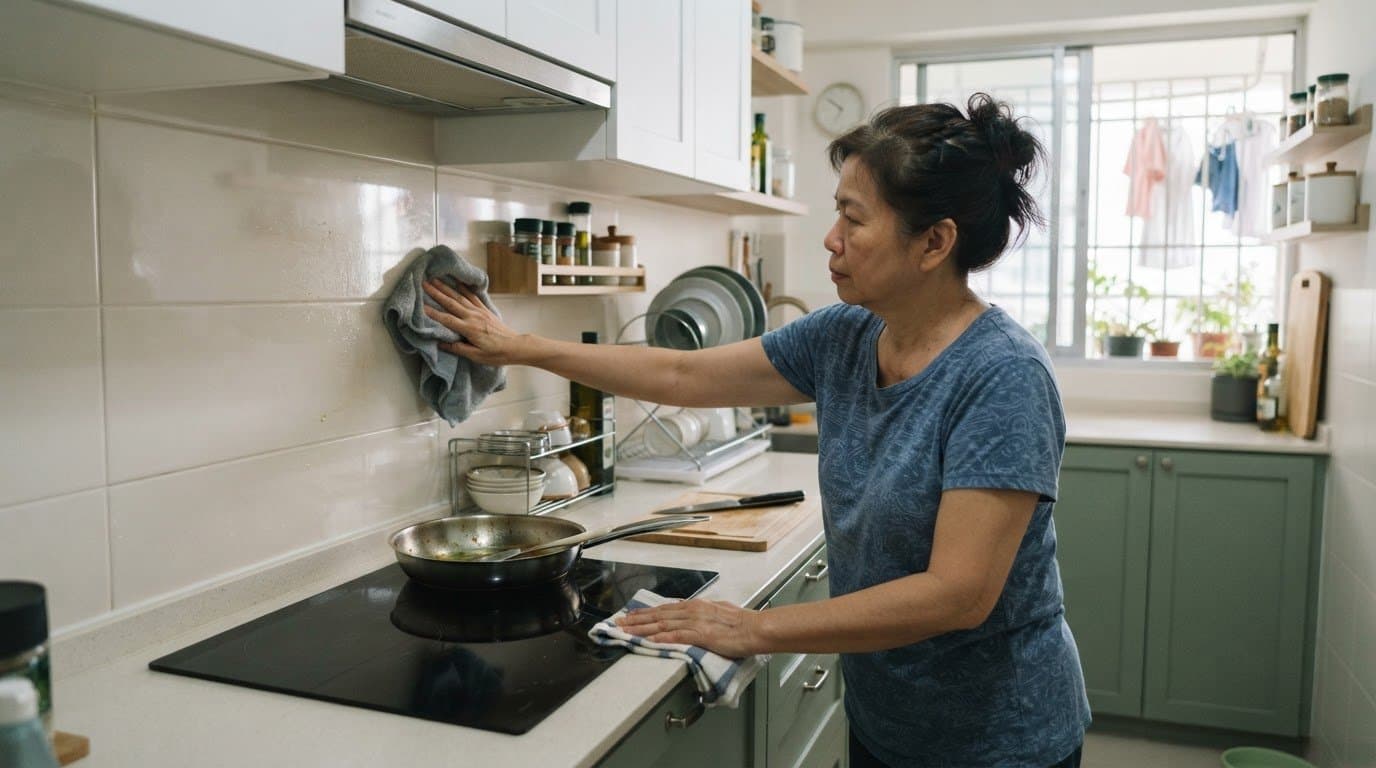
Easy to Clean Kitchen Backsplash Ideas for Every Kitchen
Explore easy to clean kitchen backsplash ideas, from smooth glass and porcelain to larger tiles, with style guidance and care tips to reduce scrubbing.
More grout can mean more scrubbing, even when the tiles are easy to wipe. The easiest backsplashes to maintain usually combine a smooth surface, such as glossy glass or porcelain, with larger tiles that leave fewer grout lines to clean. These easy to clean kitchen backsplash ideas focus on practical choices that still suit your kitchen’s style.
It makes sense to want a backsplash that handles splashes and cooking marks without becoming another time-consuming cleaning task. Both material and finish matter: glass and porcelain are practical options, while natural stone needs more careful cleaning and protection. Grout also affects upkeep, so consider the tile layout alongside colour and style.
This guide covers backsplash materials and finishes, ways to coordinate them with your cabinets and worktops, and straightforward care tips. You’ll see how large-format tiles can simplify cleaning, how to keep grout looking presentable, and which cleaners to avoid on different surfaces. The aim is to help you choose a backsplash that works for your kitchen and your routine.
Key Takeaways
- Choose smooth glass or porcelain surfaces for straightforward wipe-downs, and consider how their finish will look in your kitchen.
- Large-format tiles mean fewer grout lines to clean, while mosaics bring more detail and require attention to the grout.
- Natural stone can add distinctive veining, but it needs stone-appropriate cleaners and protection from staining.
- Coordinate backsplash colour and pattern with your cabinetry and countertops so the finished kitchen feels balanced.
- Use mild cleaning tools suited to the material, and avoid abrasive products that can scratch surfaces or damage coatings.
Table of Contents
- 1. Glass, natural stone, porcelain and mosaic materials
- 2. What is the easiest backsplash for a kitchen?
- 3. What Makes a Backsplash Easy to Clean?
- 4. Pairing backsplash tiles with cabinetry and countertops
- 5. What kitchen backsplash materials are easiest to clean?
- FT2 Interior Design
1. Glass, natural stone, porcelain and mosaic materials
Glass, natural stone, porcelain and mosaic tiles each have distinct looks and cleaning needs. A smooth, non-porous glass backsplash is easy to wipe, and its reflective surface can brighten a kitchen. Tempered glass is another easy-to-clean option. Glass tiles can be fragile, though, and fingerprints may show on reflective finishes. These easy to clean kitchen backsplash ideas work best when the surface suits your cleaning routine.
For glass backsplash cleaning, mix equal parts water and vinegar, then apply the solution to the tile. Let it sit for up to 10 minutes before wiping with a soft cloth. This approach suits glass, not natural stone: acidic cleaners can damage stone finishes. Iridescent glass tiles add colour shifts as light changes, but their glossy surface can make fingerprints more visible. A soft cloth helps remove marks without abrasive scrubbing.
Natural stone brings individual veining and texture to a backsplash, but porous surfaces need more care. Marble, granite and travertine can require sealing to help protect against stains and moisture. Marble tiles may need resealing every 6-12 months. Clean stone with a stone-specific product, and avoid acidic chemicals. This care matters around cooking areas, where splashes can sit on the surface if they are not wiped away.
Porcelain is a practical backsplash tile for everyday kitchen messes. It resists stains and moisture, though its weight makes professional installation a sensible choice. Use a suitable cleaning solution, leave it on the tile for five to 10 minutes, then rinse. Mosaic tiles create a detailed pattern, but their many grout lines need regular attention. Larger pieces usually mean less grout to clean than small mosaic formats.
Each material has trade-offs: glass is reflective and easy to clean but can be fragile and show fingerprints; porcelain handles everyday messes but is heavier. Stainless steel is described as hygienic, while engineered quartz is non-porous. These traits are useful to consider, but they don’t determine on their own how a backsplash will suit your kitchen or cleaning habits.
For a kitchen backsplash near the hob, don’t assume a material is heat-safe based on its name alone. Choose a product specified for that location and follow its installation guidance. Porcelain is practical for kitchen messes, but not every porcelain or glass product is necessarily suitable for every hob.
You can install a new backsplash over existing tiles if the old surface is firmly attached and in sound condition. First, clean the tiles and check for loose, cracked or uneven areas. Repair or remove any problem sections so the new surface has a stable base. Existing tile thickness and the planned finish also affect how the backsplash meets nearby cabinets and edges.
2. What is the easiest backsplash for a kitchen?
For easier cleaning, choose large-format tiles or a slab with a smooth surface. Fewer grout lines mean fewer narrow joints where cooking splashes and residue can collect. A broad, uninterrupted surface is also more direct to wipe: move a soft cloth across it instead of working around a dense pattern of joints. Ease of cleaning depends on more than material; tile size and layout matter too.
According to the National Environment Agency (NEA), large-surface wall tiles are encouraged for easy maintenance, with a minimum tile size of 100mm by 200mm. Larger formats reduce the number of grout lines across the same wall area. That can make a difference behind a hob or sink, where grease and water may reach the backsplash. Fewer joints do not remove the need to clean grout, but they make it less dominant in the overall surface.
A slab creates a more continuous look, while large-format tiles offer a similar effect with visible joints. A plain slab, for example, can suit a minimalist kitchen, while rectangular tiles add a subtle pattern without the busy texture of small mosaics. Choose a surface you can wipe easily, then consider how its colour and finish will sit beside your cabinets and countertop. A timeless neutral can leave room to change accessories later.
For a small Singapore kitchen, use a light-coloured, smooth backsplash and keep the tile pattern simple. A larger format can help reduce grout lines and avoid visually busy detail. If you prefer warmth, bring it in through a muted tone or natural-looking texture, rather than many small contrasting tiles. A 4-inch backsplash can suit a small kitchen, while extending coverage behind the hob and sink protects more of the wall from splashes.
There’s no single low-maintenance backsplash that suits every kitchen. Your choice depends on the wall area, nearby cabinetry and countertop, and whether you prefer a slab or tiled finish. For a clear comparison, consider how much grout each layout creates and how easily you can wipe the surface during routine cleaning. These practical details help you weigh the look against the effort needed to maintain it.
Before finalising the layout, assess the whole wall rather than a single tile sample. Check how grout lines align with cabinet edges, power points and the countertop. Large tiles may need careful placement around these features, while a slab can reduce visible joints but still requires clean, precise edges. Planning these details helps the backsplash look intentional and keeps the finished surface practical to use.
3. What Makes a Backsplash Easy to Clean?
A backsplash is easier to maintain when its surface wipes clean and its joints are easy to reach. Finish, colour, texture and grout all affect the daily routine. Smooth ceramic tile, for example, has different cleaning needs from deeply textured stone. Consider how grease, water and fingerprints will show on your chosen colours, not just how a sample looks under showroom lighting.
Glossy finishes are generally straightforward to wipe, and smooth, non-porous glass is an easy-clean option. Reflection can make a kitchen feel brighter, but it may also make fingerprints and water spots more visible. Matte finishes can soften glare and disguise some marks. However, a heavily textured matte surface may take more effort to wipe than a smooth one. Check the texture as well as the sheen.
Dark backsplash surfaces can make some everyday marks less noticeable in a hardworking kitchen. A mid-tone or subtly patterned tile can also help disguise small splashes between cleanings. No colour hides every type of residue: pale water spots may stand out against dark surfaces, while darker grease marks can show on pale ones. Use a sample to judge the effect beside your cabinets and countertop.
Natural stone options include marble, granite and travertine. Their veining creates a distinctive visual feature on kitchen walls, and natural stone can add resale appeal to a home. Porosity is the trade-off. Stone can absorb moisture or stain, so marble may need sealing every 6-12 months. Clean it with a stone-specific cleaner, and avoid acidic chemicals that can harm the finish.
For a marble backsplash, wipe up spills promptly with a soft cloth and a cleaner made for stone. Avoid vinegar and other acidic products, even if they work on glass. Ceramic and porcelain need a different routine: mild detergent and a soft sponge suit these tile surfaces. Abrasive cleaners can scratch tiles or damage coatings, so leave scouring pads out of your regular cleaning kit.
Grout affects upkeep as much as the tile. Seal it to help prevent staining, then clean it periodically with a grout brush. Focus on joints near the hob and sink, where cooking splashes and water commonly land. A brush reaches narrow grout channels more effectively than a broad cloth. This simple routine helps keep the contrast between tile and grout looking intentional.
For easy wiping and understated style, pair a smooth surface with a pattern that doesn’t rely on many small joints. If you want natural marble’s veining, plan for sealing and stone-safe cleaning. If a lower-effort routine matters most, smooth ceramic or porcelain may suit you better.
4. Pairing backsplash tiles with cabinetry and countertops
Start with the fixed finishes: your cabinets and countertop. A backsplash can connect them through a shared undertone or create deliberate contrast. For example, pale cabinets and a dark countertop may feel more balanced with a backsplash that repeats a warm or cool tone from either surface. Check samples together in your kitchen’s lighting before choosing a colour or pattern.
For a calm look, pair patterned cabinets or a strongly veined countertop with a simpler backsplash. Plain porcelain tile can let a busy stone surface remain the focus. If your cabinets and countertop are both understated, patterned tile can add interest without competing with existing details. Make one finish the main feature, then use the others to support it.
Mother-of-pearl tiles create a shifting sheen that changes with the light. They can add a distinctive accent behind open shelving or along a shorter backsplash area. To keep the effect controlled, pair them with plain cabinets and a quiet countertop rather than layering several bold patterns. The surface is decorative, so use a soft cloth and gentle cleaner to protect its finish during routine cleaning.
Faux wood tiles bring a wood-like pattern to the wall without adding another wood finish beside timber cabinets. A porcelain version can coordinate with wood-grain cabinetry through colour while keeping the materials visually distinct. For example, choose a cooler tile tone beside warm oak-look cabinets, or repeat a similar undertone for a more continuous effect. Review the pattern across several tiles, not just one sample.
Contrast can define the kitchen without making the backsplash feel disconnected. Match light grout to pale cabinets for a quieter look, or choose contrasting grout to outline the tile pattern. The second option makes each joint more visible, so weigh the extra visual detail against your cleaning preferences. A dark backsplash can tie in with a dark countertop, while a lighter tile can set the two surfaces apart.
For a durable, coordinated scheme, consider how each material meets the countertop and cabinets. Porcelain comes in a range of colours and patterns, making it easier to echo a countertop detail without copying it exactly. A small sample can show whether a tile looks warmer, cooler or more reflective beside your existing finishes. View it vertically against the wall, since light can change its appearance.
In a resale kitchen, a restrained combination can leave room for future changes. Neutral cabinets, a simple countertop and one distinctive backsplash detail create a composed finish without relying on several competing patterns. If you prefer mother-of-pearl or faux wood, let that tile provide the character. Pairing one expressive surface with quieter finishes keeps the overall design clear and considered.
5. What kitchen backsplash materials are easiest to clean?
Smooth, non-porous surfaces are practical choices for a kitchen backsplash. Engineered quartz is non-porous, so it lacks the absorbency associated with porous stone. Stainless steel is described as hygienic for kitchen use. Porcelain and ceramic tiles also suit everyday cleaning, especially with a smooth finish and a layout with manageable grout lines.
Engineered quartz gives you a continuous-looking surface that can be wiped without working across a tiled pattern. Stainless steel offers a different, more utilitarian look and is straightforward to wipe as a sheet surface. Both can suit a kitchen where simple surface cleaning matters. Choose based on whether you prefer a clean metallic appearance or a more stone-like visual effect.
Porcelain and ceramic come in a wide range of colours, shapes and finishes. Clean either material with mild detergent and a soft sponge. Metro tiles are a practical example: their familiar rectangular shape works in modern or classic kitchens, and their smooth surface is straightforward to maintain. Glossy ceramic subway tile can reflect light, while a more muted finish gives the wall a quieter look.
The tile is only part of the cleaning picture. Smaller tiles create more joints, and grout needs periodic care. A larger tile layout reduces the number of lines to wipe around. If you like mosaic, keep it to a smaller feature area and use simpler tiles across the main cooking wall. This preserves detail without covering every surface in dense grout.
Match your cleaning routine to the material. For ceramic or porcelain, wipe with a soft sponge and mild detergent, then remove residue with a clean, damp cloth. On stainless steel, use a soft cloth and wipe in the direction of the visible grain, if there is one. For engineered quartz, follow the product’s care guidance and avoid abrasive tools that could mark the finish.
Think about the marks you notice most often. A smooth surface makes routine wiping straightforward, while grout joints need more focused attention. Glossy glass and tile can show fingerprints or water spots, so keeping the finish neat may involve a quick wipe. If you prefer less visible detail, choose a restrained pattern and a colour that works with your cabinets and countertop.
To compare materials, consider appearance, surface cleaning and grout maintenance together. A porcelain tile may suit you if you want colour and pattern options; engineered quartz or stainless steel may appeal if you prefer a broad, continuous surface. Plan your kitchen renovation around the backsplash, cabinetry and countertop as one coordinated finish.
FT2 Interior Design
FT2 Interior Design can help you plan a backsplash that works with your kitchen’s materials, layout and overall design. If you’re renovating an HDB BTO or resale flat, condominium, or landed property, consider tile finish and grout alongside your cabinetry and countertop. That makes it easier to balance the look you want with the cleaning routine you can maintain.
Bring your preferences for colour, texture and upkeep into the wider renovation plan. For example, a smooth porcelain backsplash can complement simple cabinetry, while a more distinctive tile can become an accent against quieter finishes. FT2 Interior Design’s home renovation and interior design services can help bring these choices together as part of your home’s design.
Contact FT2 Interior Design to discuss your kitchen renovation plans.
Shape a Kitchen That Works for You
Your backsplash is part of a larger kitchen plan. Before settling on a finish, consider how it will sit beside your cabinets, countertop and lighting, and how you use the kitchen each day. A design that suits the whole room can feel considered long after trends change. Use these easy to clean kitchen backsplash ideas as a starting point, then adapt them to the home you’re renovating.
FT2 Interior Design offers HDB BTO Home Renovation, HDB Resale Home Renovation and Condominium Home Renovation. If you’re planning one of these projects, the backsplash can be considered alongside the wider kitchen design, rather than as a last-minute detail. Your preferred materials, colours and care routine can help guide a finish that feels right for your space.
Take the next step with a clear sense of what matters most to you: simple upkeep, a distinctive look, or a balance of both. Contact FT2 Interior Design to discuss your renovation plans and kitchen design. A thoughtful choice can help make your kitchen feel more like home.
Frequently Asked Questions
What Makes a Backsplash Easy to Clean?
A backsplash is easier to clean when you can reach the whole surface with a cloth and remove residue without scrubbing. Consider tile edges, grout joints and the area behind small appliances, not just the material. A smooth finish and uncomplicated layout make routine wiping easier. For example, a backsplash that runs neatly behind a kettle leaves fewer awkward corners where splashes and crumbs can collect.
What is the easiest backsplash for a kitchen?
A smooth, non-porous surface with minimal joints is a practical choice for a kitchen that needs simple upkeep. A broad porcelain surface or slab can limit places where grease gathers. Consider your cooking habits too: a wall behind a frequently used hob needs to be easy to reach and wipe. Choose a finish that suits how you cook rather than judging ease of care by appearance alone.
Are large-format tiles easier to clean than small tiles or mosaics?
Usually, yes. Large-format tiles create fewer grout joints across the wall, leaving less narrow detailing to clean. Small tiles and mosaics add pattern, but their greater number of joints can call for more focused attention. For a useful compromise, use larger tiles across the main cooking area and reserve mosaic for a small feature section, such as a niche away from regular splashes.
Is a slab backsplash easier to maintain than tiled backsplash?
A slab can be simpler to wipe because it has fewer joints across the main surface. Tiled backsplashes offer more choice in colour and pattern, but grout adds another area to maintain. Slabs still have edges, corners and joins that need cleaning, and their size makes installation planning important. Compare the finished wall, including outlets and cabinet edges, before choosing between slab and tile.
What grout types resist stains and need the least maintenance?
Epoxy grout is commonly selected when stain resistance and reduced porosity matter, while cement-based grout generally needs suitable sealing and periodic care. The right choice depends on the tile, joint size and installation requirements. Follow the grout maker’s cleaning and sealing instructions, and use a compatible product. No grout is maintenance-free, so include the joints in your regular backsplash wipe-down.
How do you clean grease and food splashes from different backsplash materials?
For ceramic or porcelain, wipe fresh splashes with mild detergent and a soft sponge, then rinse away residue. On glass, use a soft cloth and a water-and-vinegar mixture; avoid abrasive pads that can scratch. For natural stone, choose a stone-specific cleaner and avoid acidic products. Clean spills promptly, especially on porous stone, and wipe grout separately so residue doesn’t remain in the joints.
Related Articles

12
Nov
Managing Renovation Noise Complaints: Hours, Limits and Next Steps
Managing renovation noise complaints in Singapore? Learn HDB work hours, restric...
11
Nov
Renovation Loan vs Personal Loan in Singapore: Compare Costs
Compare renovation loan vs personal loan Singapore by permitted uses, rates, rep...
10
Nov
Feng shui for your HDB main door, starting with your new home
Explore feng shui for hdb main door placement, nearby corridors and door alignme...

09
Nov
How to Plan Your BTO Renovation Before You Collect the Keys
Learn how to plan your BTO renovation before key collection, compare proposals, ...
08
Nov
How to Save Money on HDB Renovation, Furnishings and Appliances
Learn how to save money on hdb renovation by prioritising essential work, keepin...

07
Nov
How to Budget for a 5-Room BTO Renovation: Costs and Choices
Learn how to budget for 5-room BTO renovation in Singapore with practical guidan...