
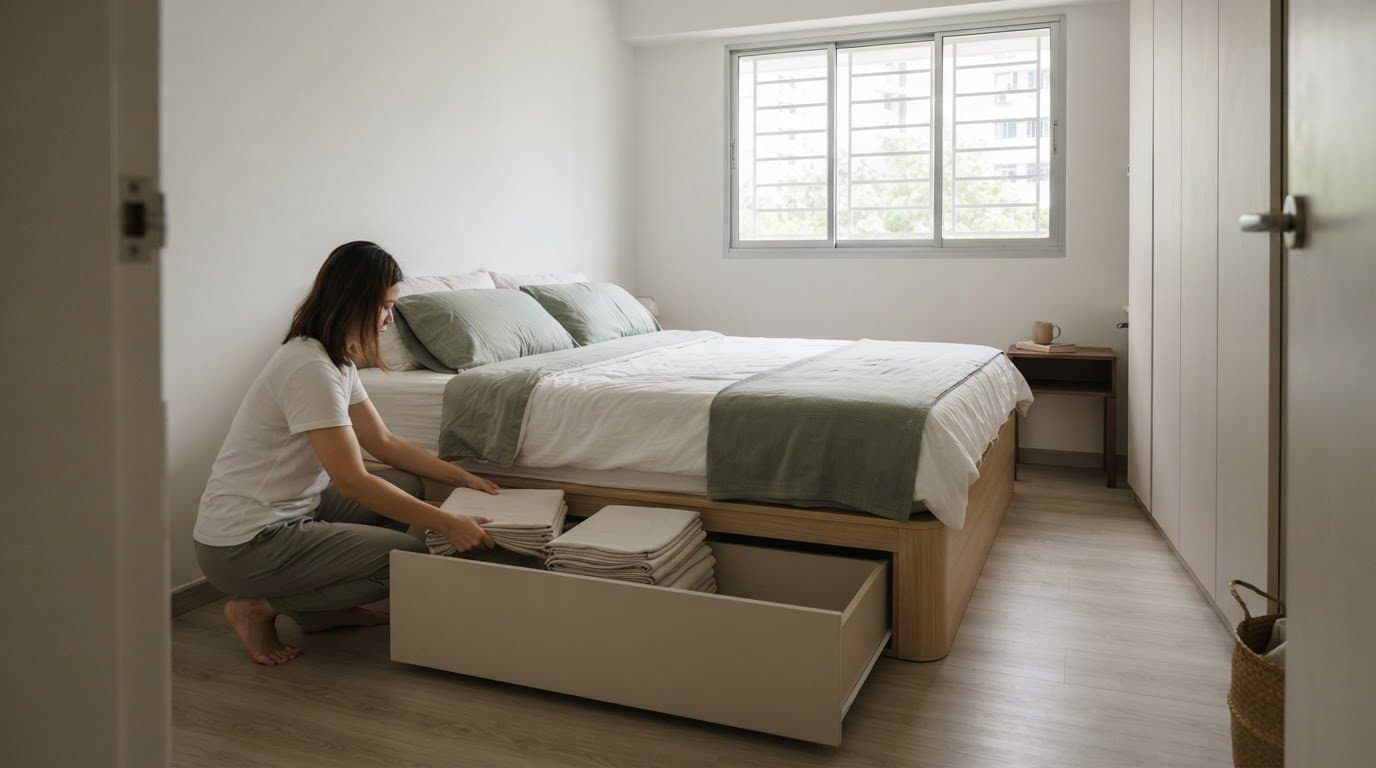
Platform Bed with Storage for HDB: Choosing Queen or King
Choose a platform bed with storage for HDB bedrooms: compare drawers and lift-up bases, assess queen or king fit, and plan access around your room layout.
The biggest storage space isn’t always the best choice for an HDB bedroom. When choosing a platform bed with storage for HDB, consider what you’ll store and how often you’ll need it: drawers suit items you reach for regularly, while lift-up storage can work better for bulky belongings you use less often.
Both options make use of the space beneath the bed, but each needs room to open. Drawers require clearance at the sides, while a lift-up base needs access to raise the mattress platform. The best fit depends on your room layout and what you plan to store.
This guide explains how to choose between drawers and lift-up storage, assess whether a queen or king bed will leave enough room to move, and decide when a storage bed is worth the floor space. You’ll also learn what to measure around the bed and how a raised platform differs from a storage bed, so you can make a practical choice for your HDB bedroom.
Key Takeaways
- Choose drawers for belongings you reach for often, and lift-up storage for bulkier items you use less regularly.
- Compare the full bed-frame dimensions with your bedroom layout, including space for walkways and storage access.
- A queen or king bed should fit your sleeping needs without making it difficult to move around the room.
- Consider how much you’ll store and how often you’ll need it before deciding whether under-bed storage is worth the space.
- A built-in platform and a storage bed solve different layout needs, so weigh storage access against flexibility in the room.
Table of Contents
- Queen or king: what size storage bedframe fits an HDB bedroom?
- Drawer storage versus lift-up storage
- Is a Storage Bedframe Worth It for an HDB Flat?
- Choosing a bed based on storage needs
- What are the dimensions of common Singapore HDB bedrooms and how much space does a platform bed need?
- FT2 Interior Design
Queen or king: what size storage bedframe fits an HDB bedroom?
A queen bed can give you sleeping space and useful under-bed capacity without taking as much room as a king. The article estimates the unused area beneath a queen bed in an HDB bedroom at roughly 2.9 square metres. That estimate shows why storage can be valuable, but the actual fit depends on the full frame, not only the mattress. A platform bed with storage for an HDB bedroom should suit both your belongings and your room layout.
Start with your floor plan when choosing between a queen and king bed. Mark the full length and width of the frame, including any extensions, then add the doors, wardrobe, windows and bedside furniture. A king may suit a room with enough clear floor area, while a queen can leave more space for walking or other furniture. Don’t decide by mattress size alone: the frame and storage mechanisms may extend beyond it.
Next, test the route around the bed. Allow about 50 to 60 cm of walkway beside the bed base and about 60 cm at its foot. These are practical planning allowances, not room dimensions. Measure from the outer edge of the frame to the nearest wall or furniture, then check whether you can walk through without turning sideways or blocking a doorway. A wider bed may reduce one of these routes.
Storage access also affects which size will work. Drawers need enough side clearance to open fully, while a lift-up base needs room to raise the mattress platform. Before ordering, measure the complete frame and mark the direction each storage section opens on your floor plan. Include nearby items such as wardrobe doors and bedside tables. A queen frame with accessible storage may be more useful than a larger bed with compartments that are difficult to reach.
Use your daily routine as another test. If two people need to pass the bed while getting ready, preserve a clear route along the side they use most. If a wardrobe sits beside the bed, check that its doors won’t clash with drawers. A simple floor plan showing the bed and furniture can reveal these conflicts before you arrange the room.
Make your final choice after checking the sleeping area and storage plan together. Record the frame dimensions, clearance on each side, space at the foot and storage opening direction. Then compare queen and king layouts using the same measurements. Choose the largest option that still allows comfortable movement and easy storage access. Extra sleeping space is less useful if it makes the walkway or storage awkward.
Drawer storage versus lift-up storage
Choose drawers for items you reach for often and lift-up storage for bulky belongings beneath the mattress. The right option depends on what you’ll store and whether your bedroom allows convenient access.
Drawer Storage Design
A drawer storage bed has compartments built into its base that slide out from the sides or foot. It can make clothes, linens and other regularly used items easy to retrieve without lifting the mattress. Each drawer needs clear space to open fully, so nearby furniture can affect access.
Imagine opening a drawer beside a bedside table. If the table blocks its path, the storage is there but awkward to use. Measure the drawer’s travel and the gap between the bed and other furniture before choosing this layout. Consider which side you use most, too, since a wall may make drawers on that side impractical.
Drawer compartments divide the available space into separate sections. That can make smaller items easier to organise, especially when you group belongings by use. A fabric organiser inside a drawer can keep loose items contained. Check that the drawer itself can still slide freely with the organiser in place.
Gas-Lift Storage Access
A gas-lift storage bed raises the mattress platform using a hydraulic or gas-lift mechanism, revealing a cavity beneath. This can suit bulky items, such as luggage or thick bedding, that may not fit neatly into drawers.
Unlike drawers, a lift-up base doesn’t need side clearance for compartments to slide out. It does need room to raise the mattress platform and clear access to reach the cavity. Consider nearby furniture and how you’ll use the bed before deciding where to place it.
Lift-up storage gives access to a larger cavity, while drawers divide belongings into sections. A spare comforter may suit the open cavity, for example, while socks are easier to sort in drawers. Think about how often you need each item: frequent access favours drawers, while bulky belongings used less often may suit lift-up storage.
Both systems need access space, but in different directions. Drawers slide out from the frame; a lift-up mechanism raises the mattress platform. Mark each movement on your room plan, then check whether you can open the storage without shifting a chair, table or other furniture. Choose the mechanism that suits your access habits, not simply the largest-looking compartment.
Is a Storage Bedframe Worth It for an HDB Flat?
A storage bed can make the space beneath it useful in a compact HDB bedroom. Whether it’s worthwhile depends on what you need to store and how the bed fits your daily routine.
Making Use of Under-Bed Space
A storage bed keeps belongings beneath the mattress in drawers or a lift-up cavity. A pull-out bed uses that area for an extra sleeping surface instead. This distinction matters when you’re choosing between storage capacity and occasional guest space.
Built-in compartments can hold bedding or luggage, while a concealed pull-out bed can provide an additional place to sleep when needed. A study-table unit fitted flush beside a platform can also help keep a compact room layout together. Each option uses the floor area around the bed differently, so consider the room’s main purpose before choosing.
In Singapore’s humid climate, look for materials described as suitable for humid conditions, with sealed edges and stable joints. Consider whether the design allows airflow around stored belongings, and avoid packing the cavity so tightly that items are difficult to remove.
Storage Restrictions and Bedside Units
HDB rules prohibit using the void between a hardwood platform and the floor for storage. A raised platform may replace a bed frame, but you cannot use the space beneath it to store belongings.
This makes it important to distinguish a platform from a storage bed. A storage bed has compartments, drawers or a lift-up cavity built into its base. A study-table unit fitted flush beside a platform can keep the layout compact, but it doesn’t change the restriction on storing items beneath the platform. Plan the table and bed together so their edges and access routes don’t compete.
Checks Before Buying
Before buying, review the warranty terms, mattress compatibility and return policy. Confirm which mattress dimensions and types the frame supports, and check the conditions for returns, including any eligibility limits.
For a storage bed, check how the access mechanism works and whether the frame suits your intended use. Read the warranty to understand what it covers, how long coverage lasts and which conditions apply. These details help you assess the whole bed, not just its storage capacity.
Compare the bed’s everyday function with the alternatives. A built-in storage bed may suit a room that needs organised, accessible storage. A pull-out bed may be more useful when extra sleeping space matters more. A raised platform can create a distinct sleeping zone, but its underfloor void cannot be used for storage in an HDB flat. Choose an arrangement that supports the room’s actual use, rather than treating every unused gap as storage.
Choosing a bed based on storage needs
Start with the belongings you want to store, not the storage mechanism. A good choice matches the items’ size and how often you need them to your bedroom layout.
Sort your belongings into three groups: items used often, bulky items used occasionally, and things that don’t need to stay in the bedroom. Keep frequently used linens easy to reach, for example, while luggage or thick bedding can go in deeper storage. This quick sort shows whether you need divided compartments or a larger cavity, and whether some belongings need under-bed space at all.
Match each group to a storage style. Drawers suit smaller items you retrieve regularly, such as spare pillowcases or folded clothes, and separate compartments help keep them sorted. A lift-up bed can suit a suitcase or winter bedding because it opens access to the space beneath the mattress. Choose based on what you actually store, rather than assuming the largest cavity will be the most useful.
- Choose drawers for items you want to reach without lifting the mattress, such as regular-use linens.
- Choose lift-up storage for bulky pieces, such as luggage or thick bedding, that you access less often.
- Choose no under-bed storage if the items you want to store would make access inconvenient or are better kept elsewhere.
Consider how often you’ll open the storage. If you change bedding regularly, drawers may make frequent access easier. If you store travel bags between trips, a lift-up cavity may suit that routine. Either way, make sure the mechanism is accessible in your room. Storage that’s difficult to open can turn useful capacity into unused space.
Consider what else the bedroom needs to accommodate. A desk, wardrobe or bedside unit can compete with the bed for floor space and access. Sketch the bed and existing furniture together, then mark which drawers or storage panels need to open. A drawer facing a wardrobe, for instance, could make both harder to access. The storage plan should work with the room’s everyday activities.
Choose the bed that solves your main storage problem without creating another. If you need quick access to several small items, prioritise organised compartments. If bulky belongings take up closet space, consider a lift-up cavity. If neither suits your routine, a standard bed may be simpler. The aim is useful storage, not extra capacity you rarely use.
What are the dimensions of common Singapore HDB bedrooms and how much space does a platform bed need?
There’s no single room measurement that guarantees a platform bed will fit. In an HDB bedroom, usable floor area depends on the room’s shape, built-in features and furniture positions. Measure the clear length and width, then note the door swing, wardrobe, windows and any columns. These details determine how much space remains for the bed and access routes.
Start by marking the bed’s full footprint on a floor plan. Include the platform edge, not just the mattress outline, because the base determines how much floor space the bed occupies. Then mark the intended walkway beside the bed and at its foot. A layout that fits on paper still needs clear routes for walking and accessing storage.
Compare the platform base with a framed base of similar mattress size. The platform base takes up about 10 cm less across the room than the framed base. That difference can matter when a bedside table or wardrobe sits close to the bed. Use the actual frame dimensions for your chosen design, since the mattress measurements alone won’t show the full footprint.
Next, map how nearby furniture opens. Mark the wardrobe doors, bedroom door and any drawers on the same plan. A bed may fit between two walls, for example, but block an open wardrobe door. Show the storage opening direction, too: drawers need space to slide out, while a lift-up base needs a clear approach for raising the mattress platform.
Check the circulation space against practical planning allowances: about 50 to 60 cm beside the bed base and about 60 cm at the foot. Treat these as targets for evaluating access, not as proof that every room will feel comfortable. A bedside unit, door swing or drawer front can change the usable clearance. Measure from the bed frame to the nearest obstruction.
In a compact room, compare queen and king options using the same floor plan. Keep the walls, wardrobe and other furniture fixed, then change only the bed footprint. This makes the difference clear: one size may preserve a route to the wardrobe while the other narrows it. Check that you can also access the bed’s storage without moving furniture.
Finish with a full-scale outline using masking tape, or draw the measurements on a room plan. Walk around the marked footprint and test each door and storage opening. This practical check can expose a tight corner before you commit to a layout. Plan your bedroom layout around the bed’s full dimensions and access needs.
FT2 Interior Design
FT2 Interior Design can help you plan a bedroom layout where the bed, storage access and other renovation choices work together. If you’re renovating an HDB flat, discuss how your preferred bed size and storage style fit the room’s dimensions and everyday use. This is especially useful when planning a new BTO layout or adapting a resale bedroom around existing features.
FT2 Interior Design provides HDB BTO Home Renovation and HDB Resale Home Renovation, helping you consider bedroom needs as part of the wider renovation plan. Contact FT2 Interior Design to discuss your HDB bedroom layout.
Make Your Bedroom Plan Part of the Bigger Picture
Choosing a platform bed with storage for HDB can shape more than the sleeping area. Treat it as part of your wider home plan: the bed’s footprint, nearby furniture and access routes all affect how the room functions. If you’re planning a renovation, bring these priorities into the design conversation early, along with how you use the bedroom and what needs to fit there.
FT2 Interior Design offers HDB BTO Home Renovation and HDB Resale Home Renovation, as well as Condominium Home Renovation. These services can help you consider bedroom decisions within the context of your home’s overall layout. A clear plan gives you a stronger starting point for deciding how the bedroom should work day to day.
Share your room requirements and renovation goals with the team, then discuss a layout that reflects your needs. Contact FT2 Interior Design today to take the next step with clarity and confidence.
Frequently Asked Questions
Gas-lift or drawers: which is better?
Choose drawers for belongings you take out regularly and gas-lift storage for bulky items you access less often. Drawers can keep spare pillowcases organised, for example, while a lift-up cavity can hold a suitcase. Consider your bedroom routine as well as the contents: furniture may block a drawer, while a lift-up base needs room to raise and reach inside.
How do I choose a storage bedframe in Singapore?
Choose a frame that suits your bedroom by checking its full dimensions, storage layout and mattress compatibility. A frame with drawers may suit frequently used items, while a lift-up design may work better for bulky belongings. Consider your room layout and how you plan to use the storage before deciding.
What Is a Storage Bed?
A storage bed is a bed frame with compartments beneath the mattress, commonly arranged as drawers or a lift-up cavity. It uses the bed’s footprint to store belongings such as spare bedding or luggage. Unlike a raised hardwood platform with an empty void beneath, a storage bed has designated storage built into its base. That distinction matters in HDB flats.
What are the downsides?
Storage beds can make bedroom furniture harder to rearrange, and their access mechanisms need clear space to work. A bedside unit may block drawers; a lift-up base can be inconvenient if you need to move objects before opening it. Since the compartments add structure beneath the mattress, consider whether you’ll use them often enough to justify the bed’s footprint.
Will stored items get mouldy in Singapore's humidity?
Moisture can affect items kept in enclosed storage, so don’t put away damp bedding or clothing. Keep belongings dry, avoid packing the cavity tightly, and open the storage base every few weeks to air it out. Fabric organisers can contain smaller items, but shouldn’t obstruct access or prevent airflow.
What types of platform beds with storage are suitable for HDB flats in Singapore?
Freestanding beds with drawers or a lift-up base are options for HDB bedrooms. Their suitability depends on the room layout, full frame dimensions and space needed to access the storage. A raised hardwood platform may replace a bed frame, but HDB rules prohibit using the void between the platform and floor for storage. Keep these designs distinct when planning the room.
How do I choose a platform bed with storage in Singapore?
Compare the features that determine whether a bed will work in your room. Review the frame dimensions, mattress fit, storage configuration and access requirements. Check whether drawers or a raised mattress platform can open without hitting a wardrobe or bedside unit. Matching these details to your bedroom plan helps you assess the options practically.
What should I check before choosing a platform bed with storage?
This FAQ doesn’t provide a store directory or compare individual retailers. For your decision, focus first on the full frame dimensions, storage opening direction and required clearance. Confirm that the bed can enter your home and fit its intended position, then review the seller’s product details before ordering.
Related Articles
25
Nov
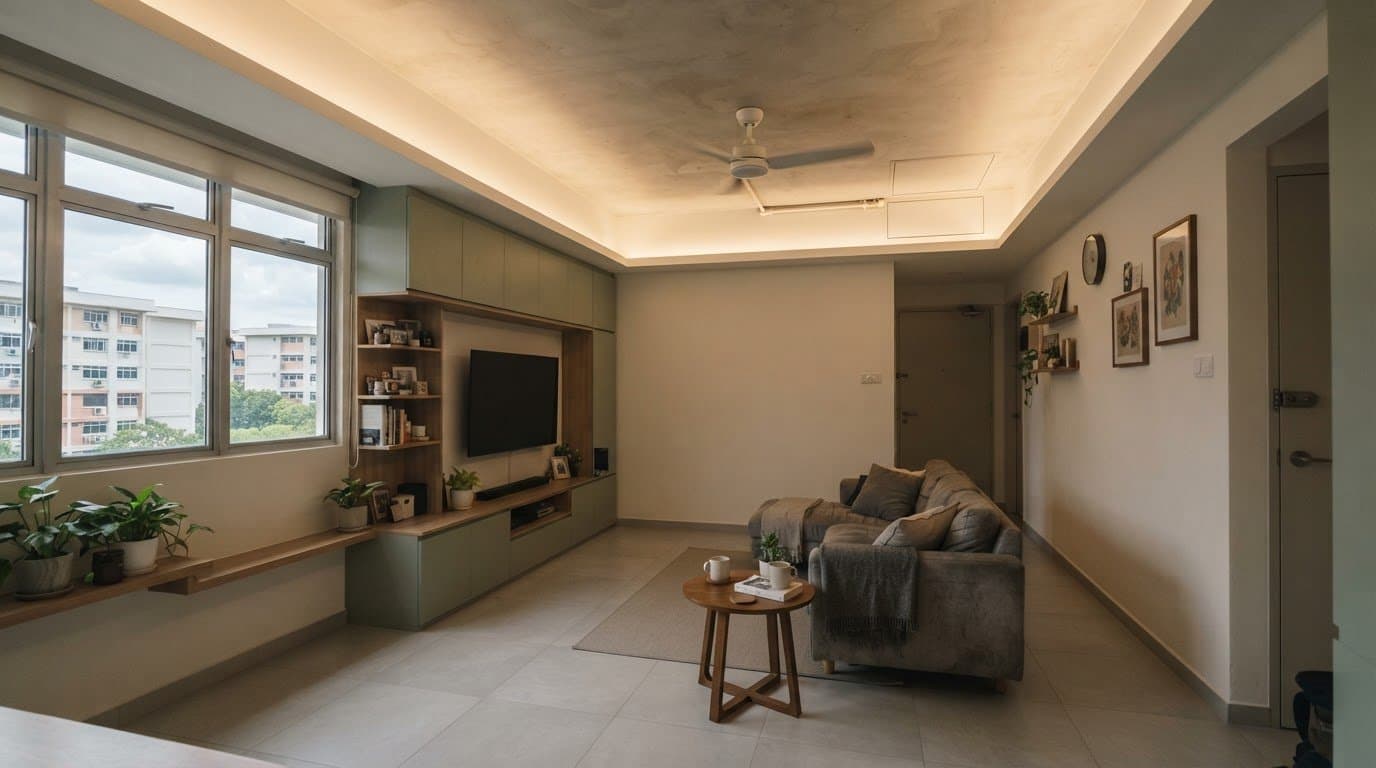
False Ceiling Designs for HDB Living Rooms and Lighting
Explore false ceiling designs for living room HDB, from partial features to cove...
24
Nov
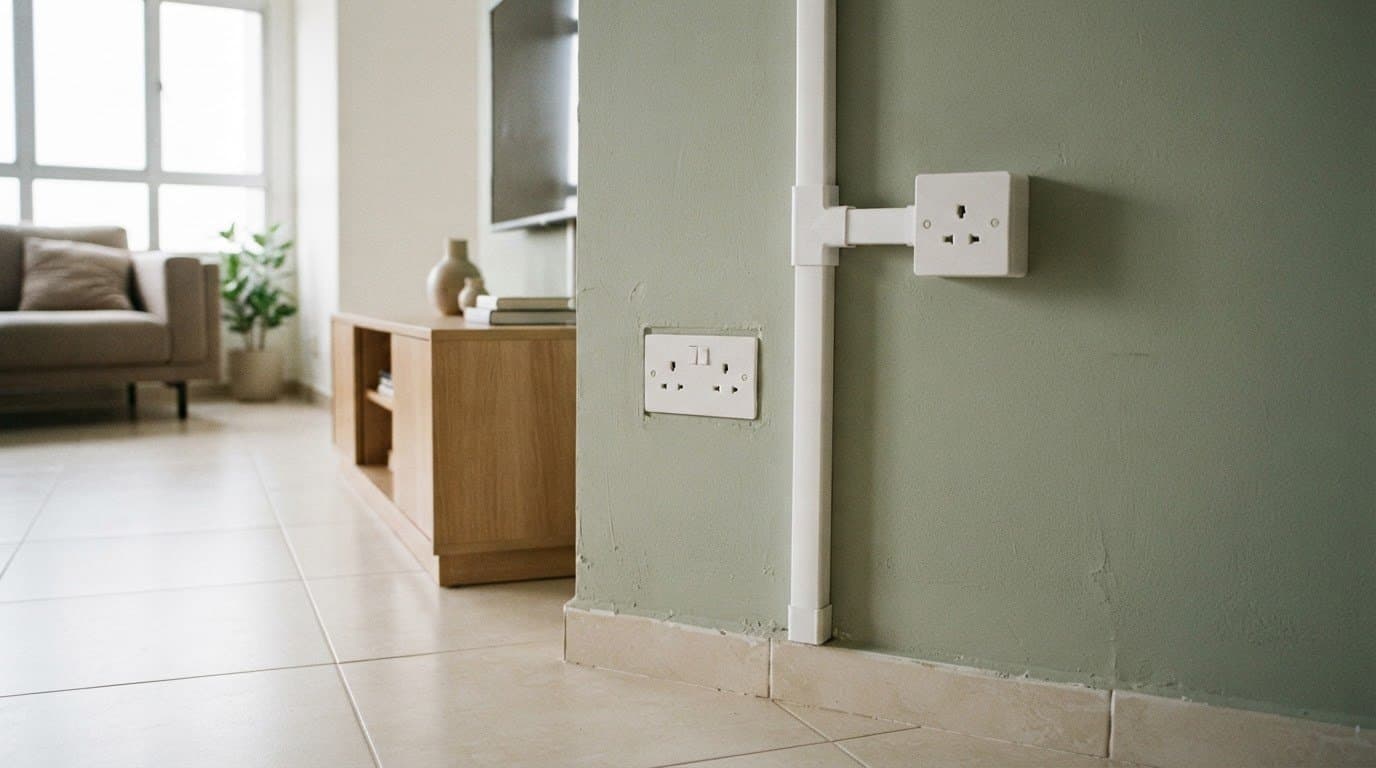
Concealed Wiring for HDB Flats: Costs, Safety and Rules
Learn what concealed wiring for HDB flats means, when exposed trunking is requir...

23
Nov
Hacking HDB Walls: A Reference to Wall Types and Restrictions
Follow hacking hdb walls guidelines in Singapore: learn HDB approval rules, wall...
22
Nov
How to get approval for DIY renovation work in your condo
Learn about DIY renovation risks for condo owners in Singapore: check approvals,...

21
Nov
Renovate or Move House in Singapore? How to Choose in 2026
Decide whether to renovate or move house in Singapore. Compare what redesign can...

20
Nov
How to Read Interior Design Floor Plans for Your Needs
Learn how to read interior design floor plans, interpret symbols and dimensions,...